

A wood pellet mill may run normally, then produce nothing after overnight shutdown. First, check whether oily flushing mixture passed through the die before shutdown. Oily flushing mixture combines an approved oil with material such as sawdust. Ordinary sawdust left inside die holes can harden while cooling. Hardened sawdust can be difficult to push out the next morning. Emptying the hopper does not replace die flushing before shutdown. Adding oil the next morning also cannot replace die flushing before shutdown.
This shutdown procedure covers TCPEL wood pellet machines that require oily die flushing. Applicable models include flat die pellet machines e vertical ring die pellet machines. Flush the die while the wood pellet mill can still produce pellets normally. Leave oily flushing mixture inside the die holes, then follow the shutdown procedure. Never force flushing material into a pellet mill that has already jammed.
Flushing Mixture Must Pass Through the Die Holes
Press rollers compress sawdust into die holes and push material toward the outlets. An empty hopper does not mean the die holes are empty. Compacted material plugs can remain inside the die after feeding stops. These plugs are columns of compressed sawdust occupying the die holes. As the die and residual sawdust cool, the compacted material may harden. Pushing hardened material out through the die holes requires greater pressure.
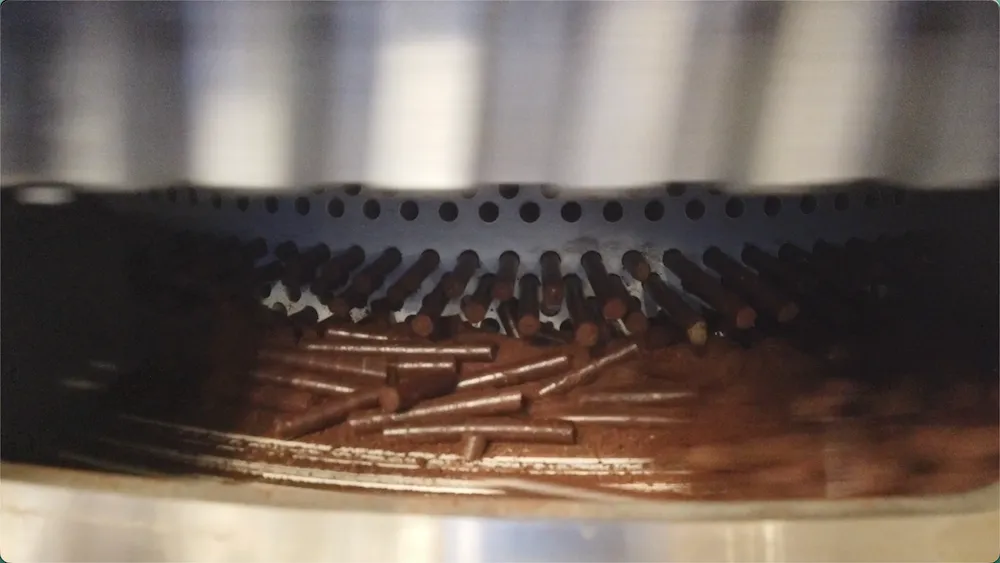
Shutdown flushing uses oil evenly blended with a carrier material, such as sawdust. Pouring liquid oil alone into the pellet mill does not perform this process. During operation, press rollers force the oily flushing mixture into the die holes. The flushing mixture gradually displaces the original sawdust and lubricates the die channels. Flushing material remains inside the die holes for the next startup. The retained flushing material is easier to push out when production restarts.
Simply pouring oil onto the die surface may leave die holes untreated. Stopping immediately after flushing material enters the hopper can also leave flushing incomplete. Confirm that oily flushing mixture has actually passed through the die holes. Flushing material still piled inside the pelleting chamber has not completed that process.
Complete Die Flushing Before Shutting Down the Pellet Mill
Prepare the oily flushing mixture before ending the production shift. Use clean, fine sawdust suitable for the specific pellet mill. Blend the sawdust evenly with manufacturer-approved vegetable oil or another approved flushing medium. Follow the pellet mill instructions for the oil type, mixing ratio and quantity. Never use waste engine oil, diesel or liquids with unknown ingredients. Keep abrasive sand used for new die break-in out of shutdown flushing mixtures.
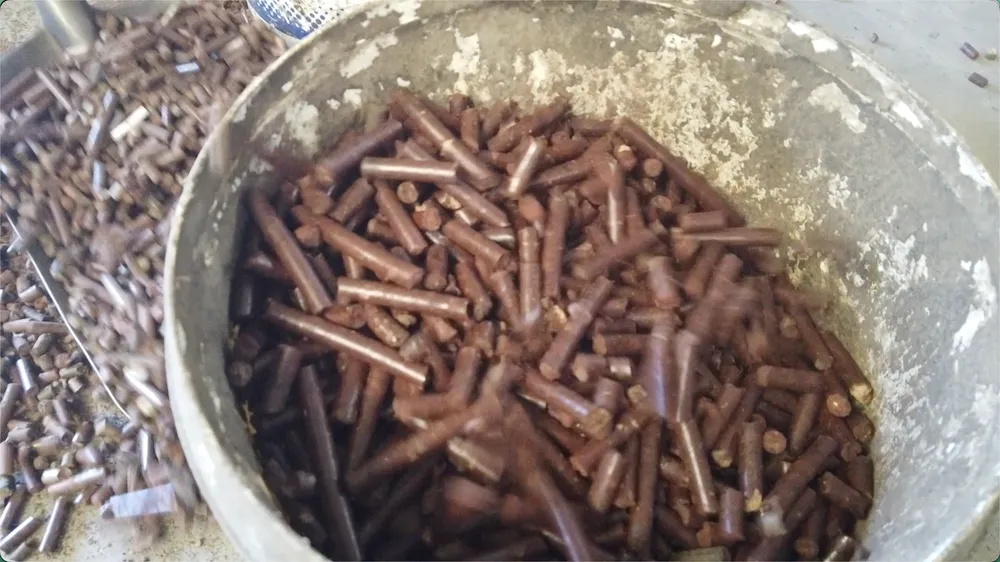
Stop supplying ordinary sawdust, then feed the oily flushing mixture evenly. Schedule this change before shutdown, while the pellet mill is operating normally. Feed flushing material through the designated inlet, with guards and safety interlocks functioning. Never fill the pelleting chamber with flushing mixture after stopping the pellet mill. Never open guards or reach into moving parts with hands or tools.
Observe pellet mill discharge from a safe position before shutting down. Confirm that ordinary wood pellets have given way to oily flushing material. Complete the die flushing process specified for the pellet mill. Hopper level and elapsed time alone cannot confirm complete die flushing. A little flushing material at the outlet does not prove blocked holes reopened.
Collect flushing discharge separately from normal finished pellets. After die flushing, do not resume production with ordinary sawdust before shutdown. Feeding ordinary sawdust again leaves ordinary production material inside the die holes.
After shutdown, isolate and lock out the relevant energy sources. Release stored energy and verify that the pellet mill cannot move unexpectedly. Wait until moving components have stopped and hot components have cooled. Then remove excess loose material from the pelleting chamber. Leave the oily flushing mixture inside the die holes for the next startup. Do not remove every trace simply to make the pellet mill completely empty. However, do not leave the pelleting chamber filled with loose flushing mixture overnight.
Discharge Flushing Material Before Resuming Normal Pellet Collection
Complete the required pellet mill checks before restarting the following day. Confirm that guards are restored, tools removed and abnormal pelleting chamber buildup cleared. Follow the startup procedure and begin with a lower sawdust feed rate. Gradually discharge the flushing mixture remaining inside the die holes. Gradually resume normal wood pellet production as the flushing mixture clears. Do not immediately reuse the previous shift’s feed rate for full production.
Collect initial flushing discharge and start-up transition material separately. Start-up transition material contains flushing mixture as normal sawdust feeding resumes. Keep flushing mixture and transition material away from normal finished pellet packaging. Confirm that flushing material has cleared before collecting normal finished pellets. Pellet condition and main motor load must also be stable. Separating startup discharge prevents flushing material from entering pellets intended for sale.
Stop feeding if pellet discharge remains absent or main motor load rises rapidly. Stop feeding if the press rollers slip or unusual noises occur. Follow the pellet mill shutdown procedure when these problems occur. Oily die flushing can reduce resistance during the next startup. However, oily flushing mixture cannot guarantee successful restarting with hardened die blockages.
Clear Hardened Die Blockages Before Restarting
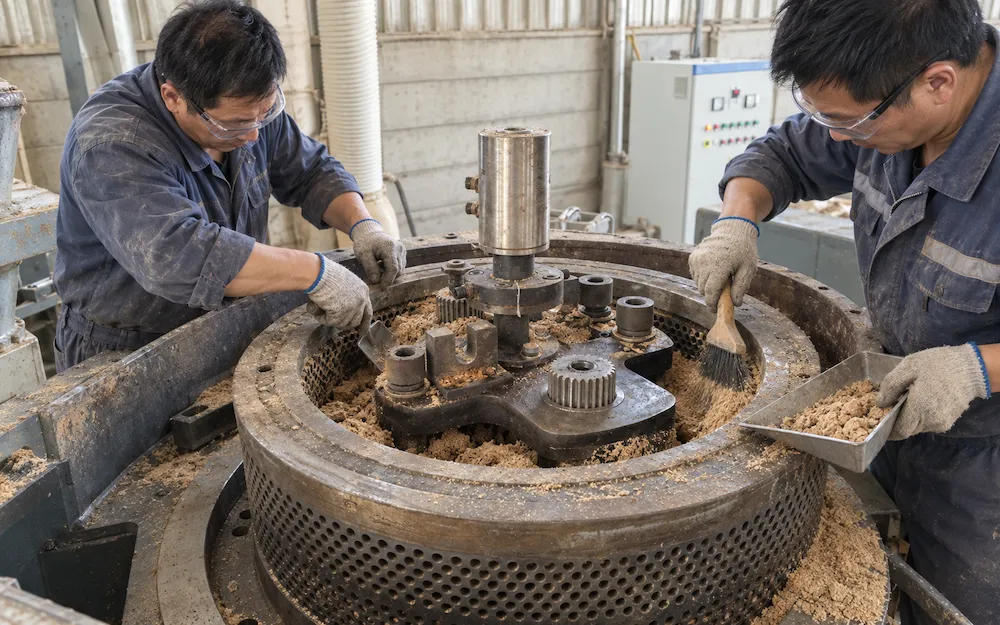
Incomplete shutdown flushing can leave hard residual sawdust inside die holes overnight. Oily flushing mixture added afterward may never reach the blocked die channels. Adding more sawdust only increases material buildup inside the pelleting chamber. Reducing roller-to-die clearance cannot replace removing material blocking the die holes. Roller-to-die clearance means the gap between press roller and die working surfaces.
Stop feeding, shut down the pellet mill, then isolate and lock out energy. Release stored energy and confirm that the pellet mill cannot move unexpectedly. Allow hot components to cool before maintenance technicians inspect the die holes. Technicians should choose an approved clearing method based on blockage severity. Suitable methods may involve cleaning, softening residue or removing the die for clearing. Use only methods permitted for the specific die.
Never repeatedly restart the pellet mill with material still blocking the die. Never burn the die with an open flame or alter die hole dimensions. After clearing the blockage, restore guards and complete the required startup preparations.
How TCPEL Checks Shutdown-Related Restart Problems
At TCPEL, we first establish when pellet output changed. Was production normal before shutdown, with no pellets appearing only the next morning? If so, we first check shutdown flushing and hardened residue inside die holes. Alternatively, pellet output may have fallen before the previous shift ended. Main motor load may also have become abnormal before shutdown. Earlier symptoms require checking raw material, the die, press rollers and drive system. Shutdown handling alone cannot explain every pellet mill fault.
We assess shutdown flushing by checking whether flushing material passed through the die. Simply adding oil does not confirm that die flushing was completed. The flushing mixture must pass through before the pellet mill is switched off. Correct shutdown flushing helps avoid dismantling a blocked die the next morning.
Routine die flushing does not replace press roller bearing greasing or gearbox maintenance. Die flushing and bearing or gearbox lubrication serve different machine components.
Emergency shutdown after tripping, jamming or overheating requires correcting the underlying fault first. Never force the pellet mill to restart just to complete missed die flushing. If normal pellet output does not return after fault correction, contattare TCPEL. Provide the pellet mill model and the previous shift’s shutdown sequence. Describe whether oily flushing material actually discharged before shutdown to help further diagnosis.
 Italiano
  English
  Español de México
  Bahasa Indonesia
  العربية
  Français
  Русский
  Português do Brasil