
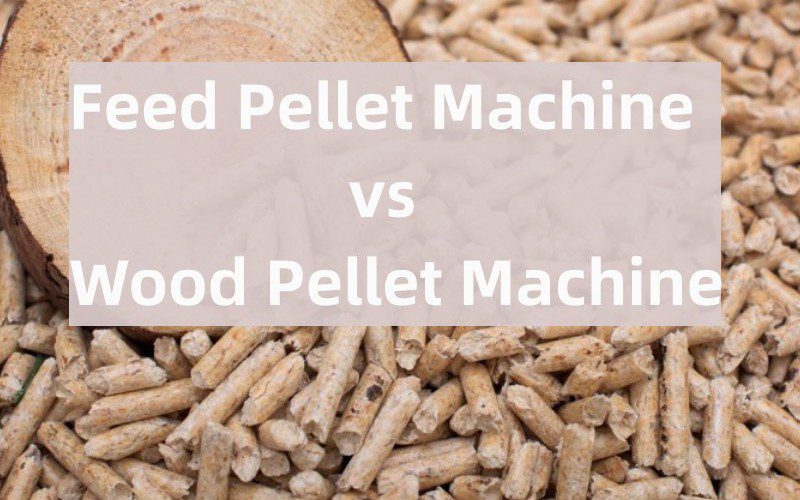
Machine granulés aliments ou bois : principales différences
Feed pellet machines and wood pellet machines both press prepared materials through a die, but they are designed for different raw materials, final pellets and production conditions. A feed pellet machine is used for animal feed formulas such as poultry, cattle, sheep and livestock feed. A wood pellet machine is used for biomass fuel materials such as sawdust, wood chips, rice husk, straw and similar fibers.
The main difference is the production goal. Feed pellet production focuses on formula mixing, pellet size for animal intake and stable nutritional distribution. Wood pellet production focuses on fuel pellet density, durability, moisture control and continuous biomass processing.
Quick Comparison Table
| Objet | Feed pellet machine | Wood pellet machine |
|---|---|---|
| Main purpose | Animal feed pellets for poultry, cattle, sheep and livestock | Biomass fuel pellets for heating, boilers or fuel projects |
| Typical raw materials | Corn, soybean meal, bran, grass powder, premixed feed formula | Sawdust, wood chips, rice husk, straw, palm fiber and biomass residues |
| Material preparation | Crushing, formula mixing and controlled feeding | Crushing, drying, sometimes screening and storage before pelletizing |
| Moisture requirement | Depends on formula and pellet diameter | Usually requires strict moisture control before pelletizing |
| Pellet diameter | Selected by animal type and age | Usually selected by fuel use and market requirement |
| Machine structure | Often selected for feed formula flow and animal feed pellet quality | Often selected for high-pressure biomass compression and continuous output |
| Auxiliary equipment | Crusher, mixer, conveyor, cooler, screener and packing machine | Crusher, dryer, conveyor, pellet mill, cooler, screener and packing machine |
| Final quality focus | Uniform formula, suitable hardness and feeding performance | Density, durability, low fines and stable burning performance |
Raw Material Difference
A machine à granuler les aliments pour animaux works with prepared feed formula. The formula may include grain powder, protein meal, minerals, vitamins and other additives. Consistent mixing is important because each pellet should carry a stable formula.
A machine à granuler le bois or biomass pellet machine works with fibrous material. Sawdust and wood chips often need crushing and drying before pelletizing. If the material is too wet, too coarse or inconsistent, output and pellet quality can drop quickly.
Process Difference
Feed pellet production usually starts with crushing and mixing. After pelletizing, feed pellets may be cooled, screened and packed. The process should match animal type, pellet diameter, formula and required capacity.
Wood pellet production often needs stronger raw material preparation. A typical biomass line may include crushing, drying, pelletizing, cooling, screening and packing. Drying is especially important when sawdust or biomass moisture is above the suitable pelletizing range.
Die and Roller Difference
Both machines rely on die and roller compression, but die selection is different. Feed pellet dies are selected according to formula, pellet diameter and animal feed requirement. Wood pellet dies are selected according to biomass fiber, moisture, density target and expected wear.
Do not choose a die only by diameter. Compression ratio, raw material abrasiveness, operating hours and spare parts plan all affect the final result.
When to Choose a Feed Pellet Machine
- You want to produce poultry, cattle, sheep or livestock feed pellets.
- Your raw material is a mixed feed formula, not mainly sawdust or wood fiber.
- You need pellet diameter selected by animal type and feeding stage.
- You need a system with crusher, mixer, pellet machine, cooler and packing machine.
When to Choose a Wood Pellet Machine
- You want to make biomass fuel pellets from sawdust, wood chips, rice husk, straw or similar material.
- Your project needs drying, cooling and screening to control fuel pellet quality.
- You need higher compression for biomass fiber and stable continuous production.
- You are planning a biomass pellet plant or fuel pellet production line.
Can One Machine Make Both Feed and Wood Pellets?
Some small flat die machines may test different materials, but commercial feed pellets and wood pellets usually need different machine configuration, die selection and auxiliary equipment. For stable production, select the machine according to the main raw material and final pellet use.
If your project may change between feed and biomass pellets, confirm the formula, material moisture, pellet diameter, capacity and spare parts before ordering. A test run is often more reliable than assuming one configuration can handle all materials.
Related TCPEL Equipment
- Feed pellet machine for animal feed production
- Flat die pellet machine for small feed and biomass projects
- Biomass pellet machine for fuel pellets
- Pellet making machines selection hub
- Rotary dryer for biomass moisture control
Feed vs Wood Pellet Machine FAQ
What is the biggest difference between a feed pellet machine and a wood pellet machine?
The biggest difference is the final use. Feed pellet machines make animal feed pellets, while wood pellet machines make biomass fuel pellets.
Can a feed pellet machine process sawdust?
It is not recommended for stable commercial production unless the machine and die are confirmed for that material. Sawdust usually requires biomass pellet equipment and proper drying.
Can a wood pellet machine make animal feed?
Not normally. Animal feed requires formula mixing, suitable pellet size and feed-specific process control.
Which machine needs a dryer?
Wood pellet projects often need a dryer because biomass moisture is usually high. Feed projects may not need a dryer if the formula moisture is already suitable.
What information should I send before choosing a machine?
Send raw material, moisture, target capacity, pellet diameter, voltage, working hours and whether you need a single machine or complete line.
Need help choosing between feed and wood pellet equipment? Send your raw material, moisture, required capacity, pellet diameter, voltage and destination port. TCPEL can recommend a suitable machine or complete line configuration.
Parler à un expert
Parler à un expert
 Français
  English
  Español de México
  Bahasa Indonesia
  العربية
  Русский
  Português do Brasil
  Italiano