

For many wood pellet projects, about 1.1-1.4 tons of prepared sawdust may be needed to produce one ton of finished wood pellets. The actual number depends on sawdust moisture, impurity removal, drying loss, particle size and pellet mill operation.
If the sawdust is wet before drying, the raw material needed before the dryer can be much higher. For quotation or line design, TCPEL usually checks raw material photos, moisture, particle size, target capacity and pellet diameter before recommending a machine à granuler le bois or complete line.
Sawdust Needed for One Ton of Pellets
| Raw material condition | Typical sawdust needed | Why it changes |
|---|---|---|
| Clean prepared sawdust, suitable moisture | About 1.1-1.4 tons for one ton of pellets | Small loss from fines, feeding and pelletizing operation |
| Wet sawdust before drying | Can be significantly higher before drying | Water is removed by the sécheur rotatif |
| Mixed sawdust with bark, sand or oversized pieces | Depends on impurity level | Screening and grinding remove unusable material |
| Very fine clean sawdust | May reduce grinding loss | Still needs correct moisture and stable pellet mill feeding |
Simple Calculation Method
Use this simple formula as a planning reference:
Required sawdust = finished pellet output / usable material ratio
Example: if the usable material ratio after drying, screening and pelletizing is 85%, then one ton of finished pellets may need about 1 / 0.85 = 1.18 tons of prepared sawdust.
This is not a guaranteed value. The real ratio should be confirmed by raw material test, moisture measurement and machine running condition.
Factor 1: Sawdust Purity
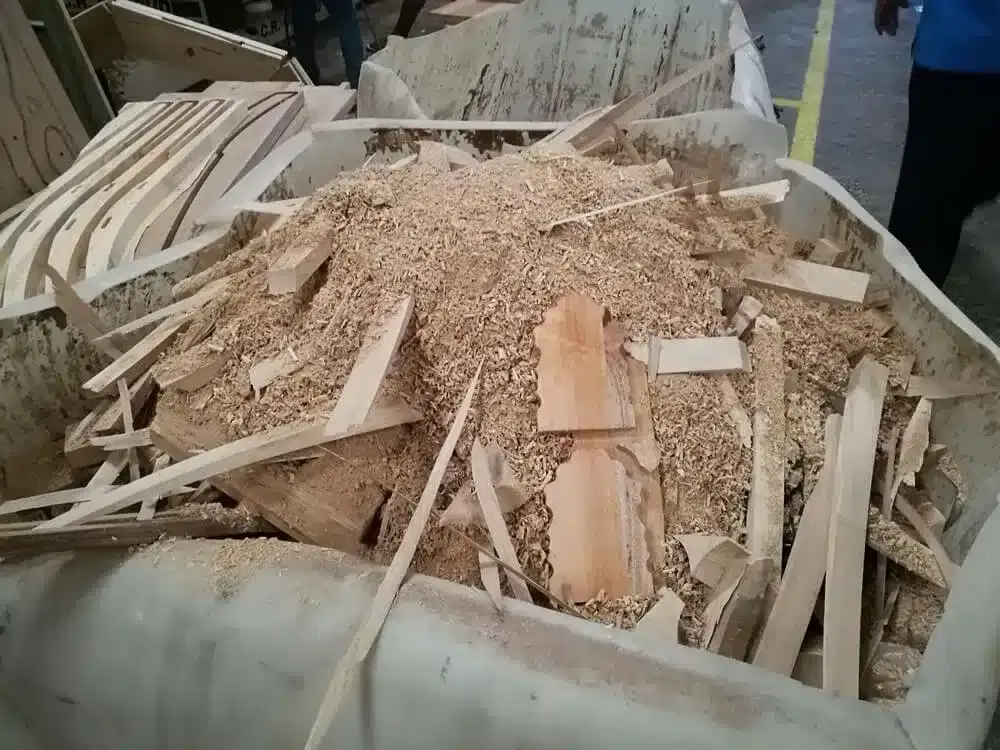
Clean sawdust gives a better usable ratio. Bark, sand, metal, stones, plastic, glue-heavy board waste and oversized pieces can increase screening loss, affect pellet quality and damage the pellet mill die or roller.
If your raw material comes from furniture factories, sawmills or pallet recycling, it is better to check whether a broyeur à marteaux, screen or magnetic separator is needed before drying and pelletizing.
Factor 2: Sawdust Moisture
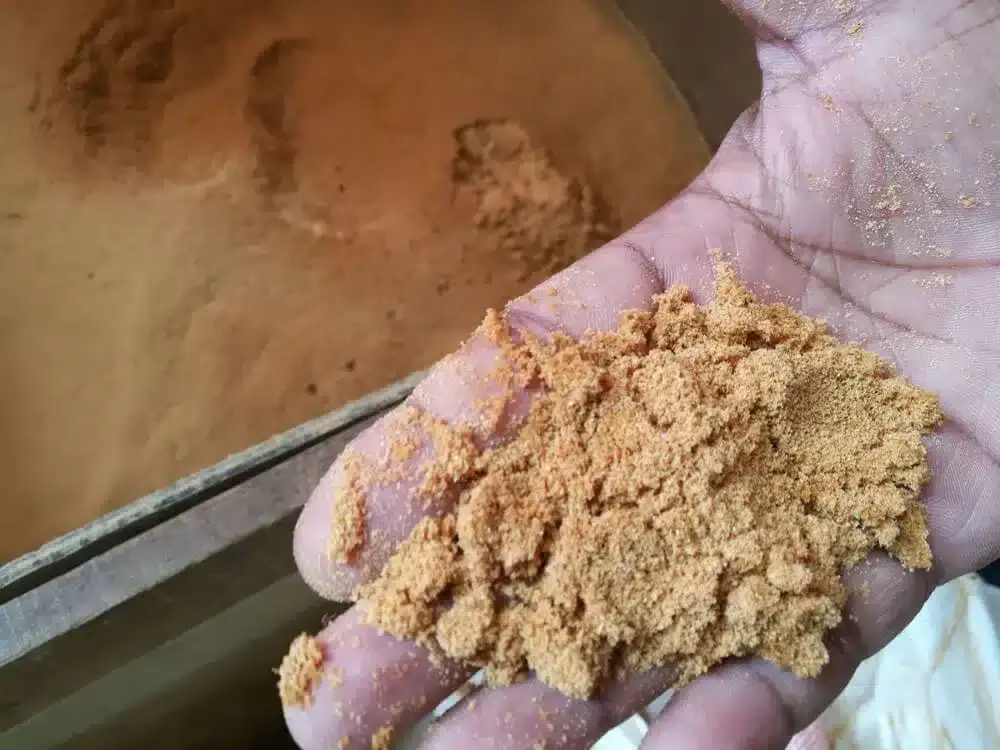
Moisture has a direct effect on raw material consumption. Wet sawdust loses weight when water is removed in the dryer. Many wood pellet projects target about 10-15% moisture before pelletizing, but the suitable range depends on wood type and pellet mill setup.
For wet sawdust, the dryer capacity should be calculated together with the pellet mill capacity. A pellet line can be limited by drying capacity even when the pellet mill itself has enough output.
Factor 3: Pellet Mill Operation
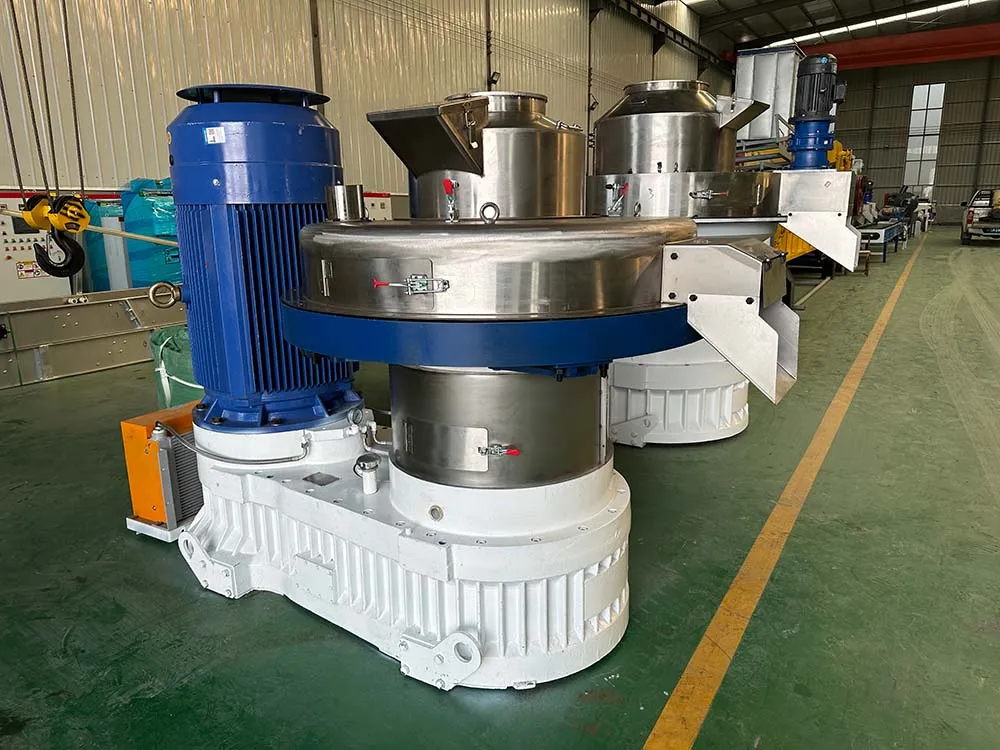
Pellet yield also depends on die condition, roller adjustment, feeding stability, raw material temperature and operator practice. A suitable moulin à pellets helps reduce waste, but the full process should be checked: grinding, drying, pelletizing, cooling, screening and packing.
For a complete project, review the biomass pellet machine et machine à emballer les granulés pages as well.
How to Reduce Sawdust Loss
- Remove stones, metal and plastic before grinding.
- Control sawdust moisture before pelletizing.
- Use a suitable hammer mill screen size.
- Match pellet diameter and die compression ratio to the material.
- Keep the pellet mill die and roller in good condition.
- Cool and screen pellets before packing.
FAQ
How much prepared sawdust is needed for one ton of wood pellets?
A common reference is about 1.1-1.4 tons of prepared sawdust for one ton of finished pellets, depending on moisture, purity and operating loss.
Does wet sawdust need more raw material?
Yes. Wet sawdust loses more weight during drying, so the raw sawdust needed before drying can be much higher.
What moisture is suitable before pelletizing?
Many wood pellet projects target about 10-15% moisture before pelletizing, but the final range depends on raw material and pellet mill setup.
Can dirty sawdust reduce pellet yield?
Yes. Bark, sand, metal, stones and oversized wood pieces can increase screening loss and damage equipment.
Which equipment affects sawdust-to-pellet yield?
Hammer mill, rotary dryer, pellet mill, cooler, screener and packing equipment all affect final yield and pellet quality.
Send sawdust moisture, target capacity and pellet diameter to TCPEL on WhatsApp.
 Français
  English
  Español de México
  Bahasa Indonesia
  العربية
  Русский
  Português do Brasil
  Italiano