
What is a feed mixer machine?
A feed mixer machine blends prepared feed ingredients before pelletizing or further feed processing. TCPEL’s current family has two routes: small stainless steel mixers identified by 50–200 kg model-size labels, and MGWJ horizontal mixers with model-specific nominal mixing throughput. The small kg labels are not hourly or batch capacity. Choose between the two types by material form, the required small-mixer model size or horizontal throughput, feed-line integration needs and the applicable power supply.
What Is a Feed Mixer Machine?
A feed mixer blends prepared feed ingredients into mixed material for pelletizing or other feed processing. TCPEL’s current feed mixer family provides two distinct routes: compact stainless steel mixers identified by 50, 75, 100, 150 and 200 kg model-size labels, and MGWJ horizontal mixers with model-specific nominal throughput. The small-series kg values are model labels, not kg/h or kg/batch. The horizontal series supports higher-throughput mixing and feed-line integration, while the small stainless route suits compact, lower-scale projects. Select the equipment by ingredient type and form, the correct model-size or throughput metric, downstream pelletizing requirements and applicable power supply.
Choose Your Feed Mixer Type
Small-Capacity Stainless Steel Feed Mixer
A compact circular mixer route for powdered, granulated and fiber feed ingredients in smaller feed-mixing projects.
- Five current model-size labels: 50, 75, 100, 150 and 200 kg
- Shared source specifications: 3 kW, 1400 r/min and 15 min mixing time
- 220V / 380V configuration documented
Horizontal MGWJ Feed Mixer
A higher-throughput horizontal route for powders, grains and liquids within animal-feed mixing applications.
- Four current models: MGWJ-250, 500, 1000 and 2000
- Model-specific nominal mixing throughput in t/h
- Suitable for larger systems and feed-line integration
Small-Capacity Stainless Steel Feed Mixer
The current compact type uses a stainless steel barrel and spiral stirring structure. It supports powdered, granulated and fiber feed ingredients, with dry and wet feed-use evidence in the approved source.
Use its kg values only as current model-size labels. They do not define hourly throughput or batch capacity.
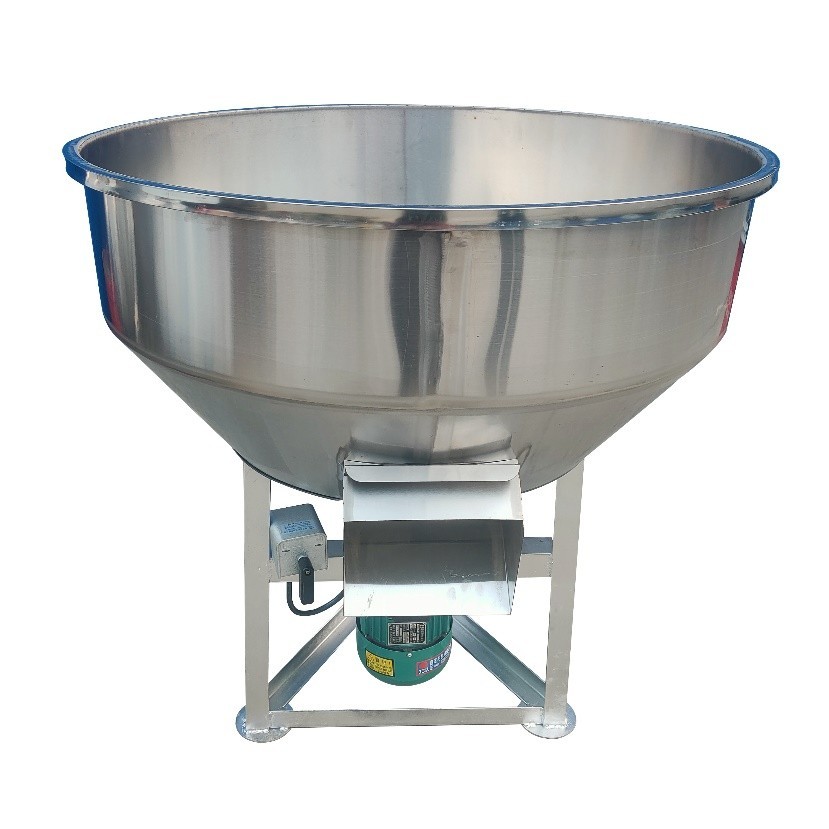
| Model | Power | Rotation speed | Height | Diameter | Mixing time | Voltage |
|---|---|---|---|---|---|---|
| 50 kg model | 3 kW | 1400 r/min | 102 cm | 57 cm | 15 min | 220V / 380V |
| 75 kg model | 3 kW | 1400 r/min | 110 cm | 64 cm | 15 min | 220V / 380V |
| 100 kg model | 3 kW | 1400 r/min | 115 cm | 69 cm | 15 min | 220V / 380V |
| 150 kg model | 3 kW | 1400 r/min | 115 cm | 90 cm | 15 min | 220V / 380V |
| 200 kg model | 3 kW | 1400 r/min | 115 cm | 100 cm | 15 min | 220V / 380V |
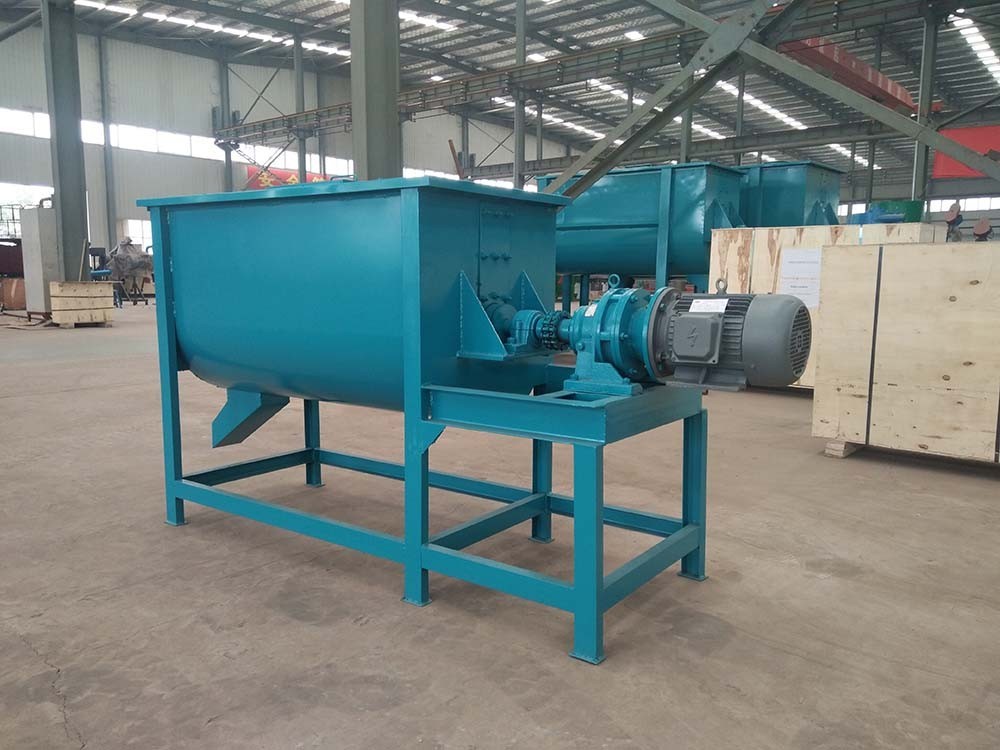
Large-Capacity Horizontal MGWJ Feed Mixer
The current MGWJ series provides higher-throughput mixing for powders, grains and liquids within animal-feed applications. Each capacity value below is model-specific nominal mixing throughput.
The t/h figures are not batch capacity, complete feed-line output or a universal family guarantee.
| Model | Power | Nominal mixing throughput | Machine size | Weight |
|---|---|---|---|---|
| MGWJ-250 | 4 kW | 0.5–1.2 t/h | 2100×800×1550 mm | 210 kg |
| MGWJ-500 | 7.5 kW | 1.3–1.8 t/h | 2800×1200×2000 mm | 900 kg |
| MGWJ-1000 | 11 kW | 1.5–2.5 t/h | 3200×1200×2300 mm | 1200 kg |
| MGWJ-2000 | 18.5 kW | 2.5–4 t/h | 3800×1400×2350 mm | 1500 kg |
Small Stainless vs Horizontal MGWJ
Choose the small stainless route when
- The project needs compact, lower-scale feed mixing.
- The material is within the documented powdered, granulated or fiber feed scope.
- Selection is based on a 50–200 kg model-size label rather than hourly output.
Choose the horizontal MGWJ route when
- The project needs model-specific higher-throughput mixing.
- The application includes powders, grains or liquids for animal-feed mixing.
- The mixer must interface with a larger feed-processing system.
Materials We Can Mix
Generic feed scope
Prepared powdered, granulated, grain and fiber feed ingredients.
Small stainless scope
Powdered, granulated and fiber feed ingredients, with dry/wet feed-use evidence.
Horizontal MGWJ scope
Powders, grains and liquids within animal-feed mixing applications.
Selection remains material- and project-specific. This page does not claim compatibility with all materials, all powders or every feed ingredient.
Input, Output and Process Boundary
Different from a hammer mill
A hammer mill reduces particle size. A feed mixer blends already prepared ingredients.
Different from a pelletizing machine
A feed pellet machine forms pellets from mixed feed material. It does not replace the mixing stage.
Feed Mixer in a Feed Pellet Production Line
A mixer can be supplied as standalone equipment or integrated as an optional mixing stage in a configured feed pellet production line. Not every project requires one specific mixer, and mixer throughput is not the complete line’s finished-feed output.
After pelletizing, a configured project may also route material through a pellet cooler and then to a pellet packing machine.
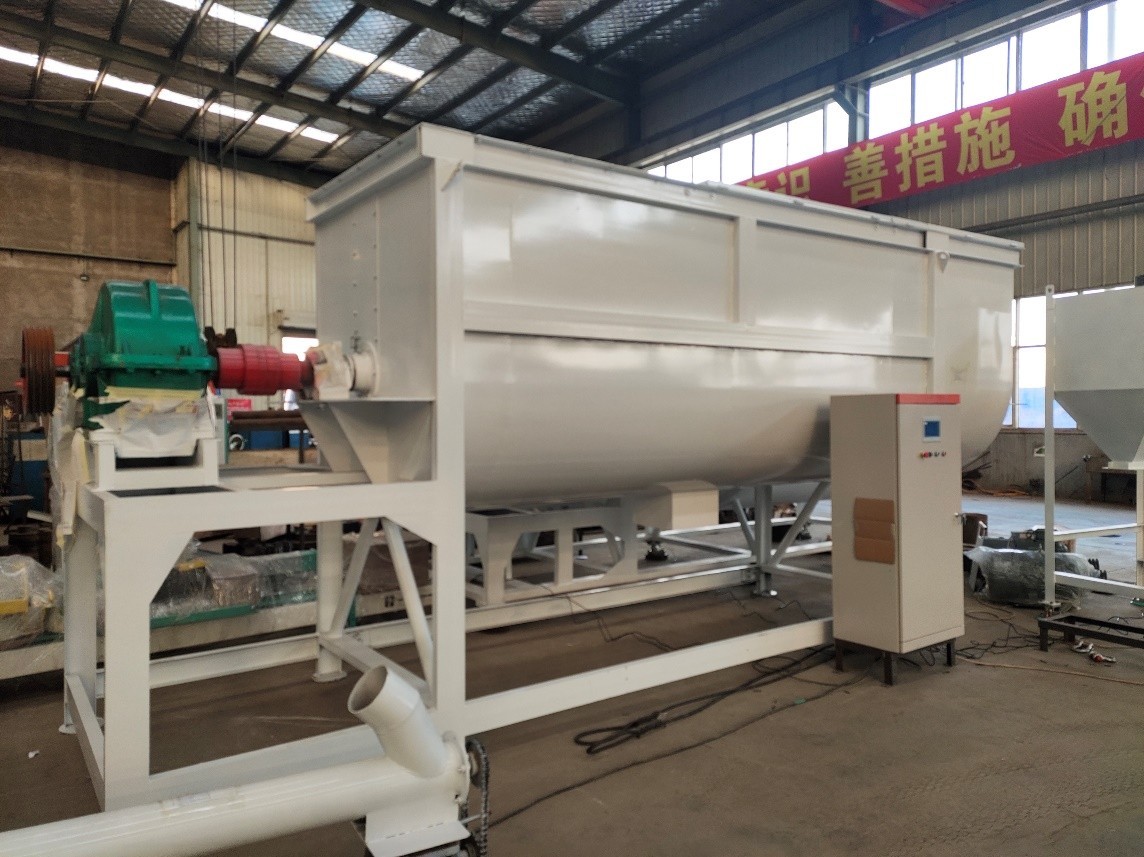
How to Choose a Feed Mixer
- Choose the mixer scale and current product type: small stainless or horizontal MGWJ.
- Provide the feed ingredient or material type.
- Describe the material form: powdered, granulated, grain, fiber or liquid within the documented scope.
- Provide the required small-mixer model-size label or horizontal nominal throughput.
- State whether the mixer is standalone or must interface with downstream pelletizing equipment.
- Confirm the applicable power supply and electrical requirement.
Feed Mixer Machine FAQs
What is a feed mixer machine?
A feed mixer blends prepared feed ingredients into mixed material before pelletizing or further feed processing. TCPEL provides a small stainless route and a horizontal MGWJ route.
What is the difference between the small stainless mixer and horizontal mixer?
The small series uses 50–200 kg model-size labels and a compact stainless configuration. MGWJ horizontal models publish model-specific nominal mixing throughput in t/h for higher-throughput and feed-line applications.
Which feed mixer should I choose?
Choose by ingredient type and form, small-versus-horizontal scale, the correct model-size or throughput metric, feed-line interface and applicable power supply.
What materials can TCPEL feed mixers handle?
The generic boundary covers prepared powdered, granulated, grain and fiber feed ingredients. Horizontal models additionally document powders, grains and liquids in mixing applications; the small type documents powdered, granulated and fiber ingredients with dry/wet feed-use evidence.
What does the kg number on the small mixer mean?
It is a current model-size label. TCPEL does not interpret these source labels as kg/h or kg/batch.
What is the capacity of MGWJ horizontal mixers?
MGWJ-250 is 0.5–1.2 t/h, MGWJ-500 is 1.3–1.8 t/h, MGWJ-1000 is 1.5–2.5 t/h, and MGWJ-2000 is 2.5–4 t/h. Each value is model-specific nominal mixing throughput.
Can the mixer be integrated into a feed pellet production line?
Yes. A mixer can be standalone equipment or an optional mixing stage in a configured feed pellet production project. Mixer throughput is not the complete line’s finished-feed output.
Is a stainless steel feed mixer available?
Yes. The current small-capacity product type uses a stainless steel barrel. The exact stainless grade is not published because it remains deferred.
Does TCPEL supply TMR mixers?
TMR mixers are outside this page’s current product scope. This page covers ingredient mixing for animal-feed processing, not ration mixer wagons or farm feeding equipment.
What information is needed for a quotation?
Provide the mixer scale or type, ingredient type, material form, required small-mixer model size or horizontal throughput, line-integration requirement and applicable power supply.
Related Feed Processing Equipment
Request a Feed Mixer Recommendation
Tell TCPEL the mixer scale or type, feed ingredients, material form, required small-mixer model size or horizontal throughput, feed-line integration requirement and applicable power supply.
Start Your Feed Mixer RFQ