

Flat die and vertical ring die wood pellet production lines experience bag condensation. Wood pellets can look dry and normal during bagging. After sealing and storage, moisture may appear on the bag’s inner surface. Pellets against the bag walls may swell and lose their firm structure. Condensation and pellet deterioration can lead to product rework and customer complaints.
Undamaged bags do not eliminate every risk of condensation and moisture damage. Moisture may come from inside the pellets. Condensation can also develop during packaging, storage or transportation.
Operators often blame bag condensation on insufficient sawdust drying. However, sawdust drying, pellet cooling, packaging and storage conditions need separate checks. This guide examines condensation inside bags after wood pellet formation.
TCPEL safety reminder: Stop the pellet cooler before cleaning deposits or performing maintenance. Isolate and lock out energy sources, then release stored energy. Never enter a cooling chamber while the pellet cooler is running.
1. Locate the Water Droplets Before Diagnosing the Problem
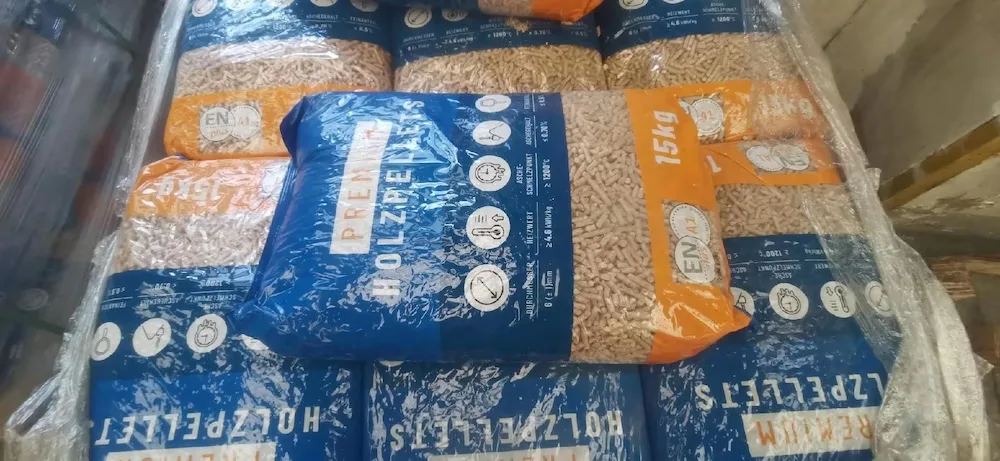
Check individual bags’ inner walls and outer surfaces. Also inspect the inside of the pallet shroud. A pallet shroud covers the entire pallet, outside the individual pellet bags. If only the pallet shroud is wet, investigate condensation and external water. Condensation occurs when its surface falls below the surrounding air’s dew point. Condensation on the shroud alone does not confirm moisture damage throughout the batch. Check whether moisture has penetrated the individual pellet bags.
If droplets appear inside individual bags, check whether the pellets swell or clump. Record when condensation first appears inside the bags. Condensation immediately after bagging calls for different checks than condensation after storage. Wiping the bag exterior cannot resolve moisture damage inside the bag.
2. Check Whether the Pellets Were Fully Cooled Before Bagging
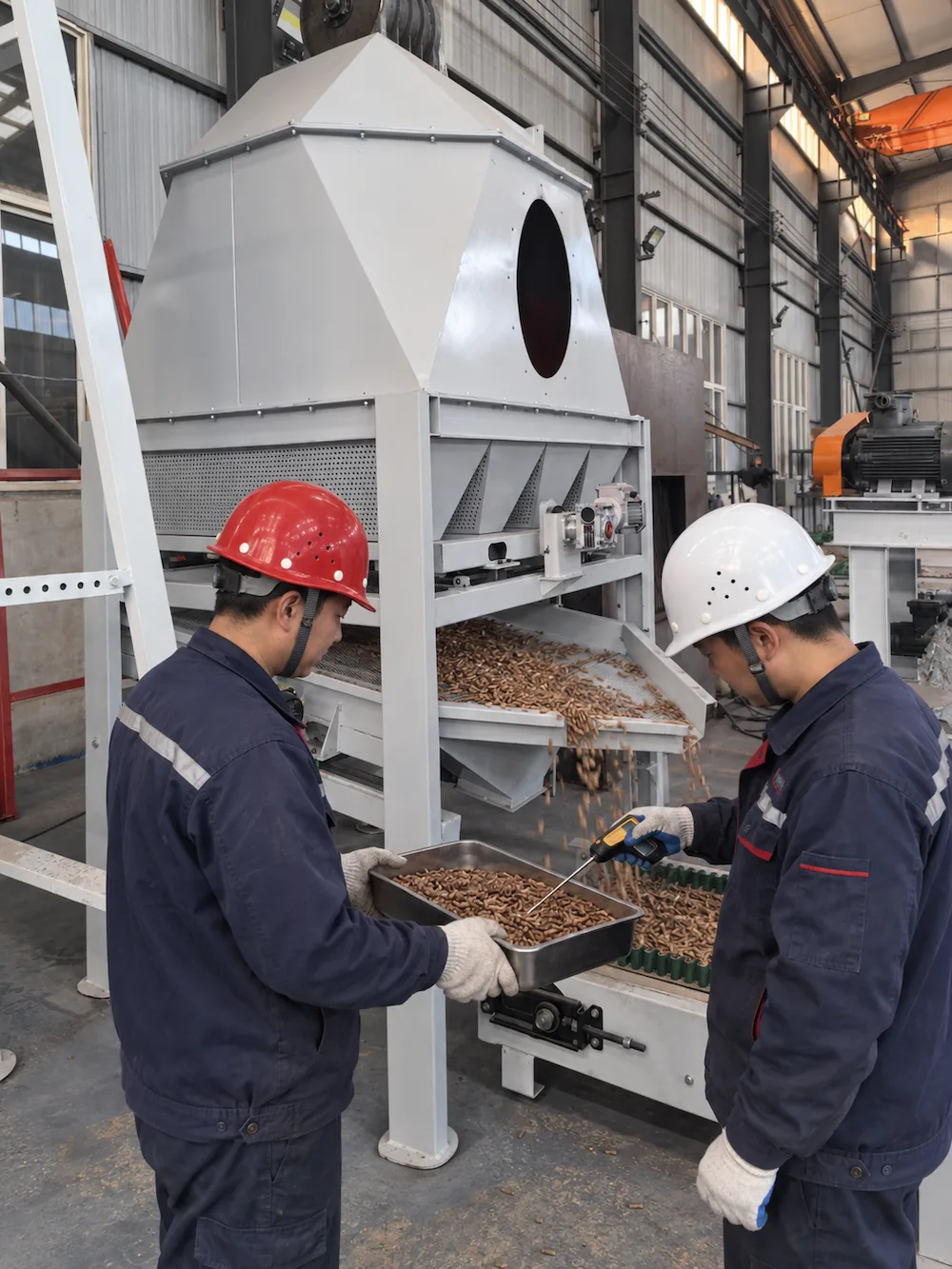
Pelletizing generates considerable heat, which the pellet cooler must remove before packaging. Warm pellets sealed inside bags can continue releasing moisture into the enclosed air. The dew point is the temperature at which airborne moisture starts condensing. When the bag wall falls below the enclosed air’s dew point, droplets form.
Pellets that feel cool may still have uneven temperatures throughout the batch. A single surface temperature reading cannot confirm uniform cooling either. Establish safe sampling points and use a consistent sampling method. Measure pellet temperatures at the pellet cooler outlet and immediately before packaging. Repeated sampling at several points helps detect intermittent discharges of hot pellets.
Condensation problems often begin after production increases. Higher throughput can shorten residence time if pellet inventory remains unchanged. Residence time means how long pellets remain inside the pellet cooler. Uneven material distribution can also leave some pellets inadequately cooled. Air passes more easily through areas offering less resistance to airflow.
Inspect the pellet cooler’s material distributor, air ducts and discharge mechanism together. A running fan does not guarantee sufficient airflow through the pellet bed. The pellet bed is the layer of pellets inside the pellet cooler. Adjust the pellet cooler only within the manufacturer’s permitted operating settings. Verify pellet cooler adjustments through discharged pellet temperatures and finished-pellet moisture measurements. Simply running the cooling fan at maximum speed is not a reliable solution.
3. Cool Pellets Can Still Contain Too Much Moisture
The main purpose of pellet cooling is to remove heat. Cooling and moisture removal are separate physical processes. A lower pellet temperature does not automatically mean acceptable moisture content for packaging. Measure finished-pellet moisture content even when the pellet cooler outlet temperature appears satisfactory. A pellet cooler cannot replace the equipment used for sawdust drying.
If finished pellets contain excessive moisture before bagging, check the incoming sawdust. Measure sawdust moisture at the pellet mill inlet and compare different raw-material batches. Promptly seal collected samples and test their moisture content. Leaving samples exposed allows moisture to evaporate, affecting the test results.
If incoming sawdust exceeds the moisture specification, address the raw material drying process. If sawdust meets specifications but finished pellets do not, investigate cooling and subsequent handling. Condensation inside bags alone does not justify increasing drying intensity.
4. Distinguish Storage Condensation From External Water Ingress
Cold pellet bags entering warm, humid warehouses readily develop condensation outside the packaging. Moisture can also migrate inside stored wood pellet bags. Inadequate production cooling does not explain every case of condensation inside pellet bags. Locate condensation inside and outside each affected wood pellet bag. Review warehouse temperature and humidity changes, roof leaks, damp floors and damaged packaging.
Bag vent holes allow trapped air to escape during packaging. Bag vent holes must follow the packaging design specifications. Never add extra holes simply because condensation appears. Water vapor can enter bags through the additional holes. Pay particular attention to bottom bags contacting damp flooring.
Separate moisture-damaged pellets that have swollen, crumbled or clumped for quality assessment. Wiping bags dry or drying pellets again does not automatically restore acceptable quality. Do not release affected pellets solely because the bags or pellets appear dry.
TCPEL Troubleshooting Guide
Use the following table to match each situation with the first checks.
Observed Situation | What to Check First |
Droplets appear inside bags immediately after packaging. | Measure pellet temperatures at several points before packaging. Check for intermittent hot-pellet discharges from the pellet cooler. Inspect material distribution, cooling residence time and airflow through the air ducts. Test finished-pellet moisture content. Confirm that the bags are undamaged. |
Droplets develop inside bags after storage or transportation. | Review temperature and humidity records from the warehouse or transport vehicle. Check pallet shrouds, damp floors and roof leaks. Inspect bag vent holes and bottom bags for moisture damage. Compare affected pellets with retained factory samples. |
Condensation begins after production output increases. | Check whether the actual load exceeds the pellet cooler’s capacity. Inspect material distribution inside the cooling chamber. Check actual pellet residence time inside the pellet cooler. Sample several points for pellet temperature and moisture measurements. |
Retained factory samples remain sound, but delivered bags develop condensation. | Review temperature and humidity changes during transportation. Check storage conditions at the customer’s warehouse. Inspect bags for damage during transportation. Check for production-line problems before ruling them out. |
A brief storage trial without droplets only confirms performance under those particular conditions. The absence of condensation does not eliminate every storage and transportation risk. Start by checking pellet temperature before packaging and finished-pellet moisture content. Then confirm where and when the water droplets appear.
If hot pellets keep leaving the pellet cooler, address the cooling system first. Do not immediately change the sawdust drying process. If pellet temperatures are normal but moisture remains excessive, focus on the raw material. Adjusting the cooling fan alone cannot address excessive raw-material moisture.
Sometimes retained factory samples remain sound, while only some delivered bags develop condensation. Sound retained samples help comparisons but cannot rule out production problems. Compare sampling times, packaging methods and storage conditions before drawing conclusions. Do not automatically blame the pellet mill itself.
TCPEL Field Service Case: Condensation After Higher Production
The customer’s equipment was a TCPEL-TCZL550B flat die wood pellet machine. The TCZL550B’s rated capacity was 1,000–1,200 kg/h. The customer increased pellet mill feeding, bringing output close to rated capacity. Pellets did not feel particularly hot, so operators bagged and sealed the pellets directly. After two to three days in storage, many bags developed droplets inside. Some pellets also began losing their firm structure. Retained factory samples stored in the workshop showed no condensation.
Measurements at several sampling points revealed intermittent hot-pellet discharges from the pellet cooler. Uneven distribution created excessively deep pellet beds in some areas. Some pellets also spent too little time inside the pellet cooler. Laboratory tests showed acceptable finished-pellet moisture content, and the sawdust met moisture specifications. Warehouse temperatures varied considerably between day and night. Warehouse humidity was relatively high at night.
Technicians adjusted the pellet cooler discharge cycle to maintain the minimum cooling residence time. They repaired the material distributor and improved pellet bed uniformity. Improved pellet distribution prevented air from bypassing areas that needed cooling. Operators measured pellet temperatures at several points before packaging. Hot pellets were kept out of the bags.
The warehouse received improved ventilation and temperature control. Moisture-resistant boards beneath the pallets separated the stored pellets from damp flooring. Production was monitored for seven consecutive days under the revised cooling and storage procedures. Bagged pellets were also observed throughout 14 days of storage. No droplets appeared inside the bags, and the pellets retained their structure.
These checks help identify likely causes of condensation in wood pellet bags. If condensation persists after every check, contact the TCPEL technical service team. Provide pellet temperature records, moisture test reports, packaging details and storage and transportation records. TCPEL engineers can then provide technical support and suitable solutions.