

Buyers choosing wood pellet or feed pellet equipment often start with die type. Some assume flat die pellet mills are only small machines for home use. Others expect ring die pellet mills to produce better pellets automatically. Neither flat die nor ring die pellet mills are better for every project.
TCPEL starts with the pellets’ intended use and the actual raw material condition. We then review output targets, effective daily operating hours, existing equipment and total budget. For poultry and livestock feed, first consider TCF inclined roller flat die pellet mills. Wood and biomass projects require a comparison of suitable TCPEL pellet mills. Compare TCZL flat die pellet mills with vertical ring die pellet mills. Prioritise evaluating vertical ring die pellet mills for high output and continuous operation. Machine design alone cannot establish which pellet mill will perform better.
TCPEL safety reminder: Stop the pellet mill before internal inspection or maintenance. The same requirement applies before removing or installing dies and press rollers. Isolate and lock out energy sources, then release stored energy. Allow hot components to cool before starting work. Follow these precautions with both flat die and ring die pellet mills.
Distinguish Flat Die and the Two Ring Die Designs
Flat Die Pellet Mills Use Disc Dies but Differ for Feed and Wood
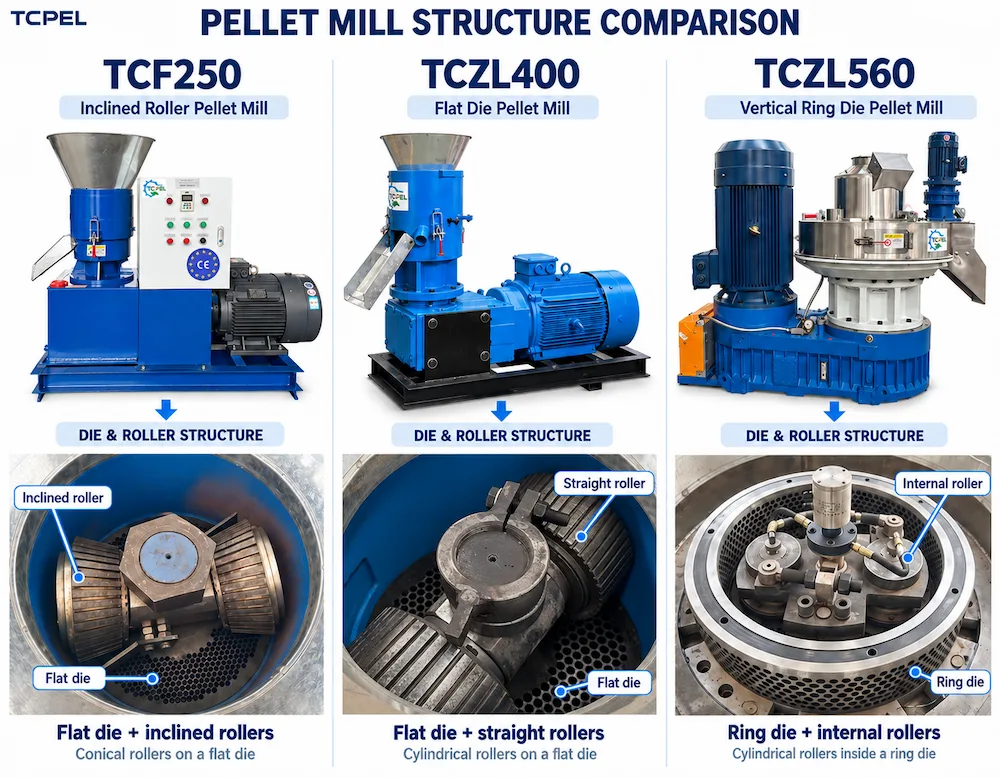
A flat die pellet mill uses a disc with holes through its thickness. Press rollers force raw material into the flat die holes. Pellets emerge from the opposite side of the flat die. Flat die pellet mills use different drive arrangements. Some flat die pellet mills have a rotating die. Other flat die pellet mills combine a stationary die with a rotating roller assembly. Do not assume all flat die pellet mills work identically.
TCPEL offers two distinct flat die product families. TCF feed pellet mills use inclined rollers and a stationary flat die. TCZL flat die wood pellet mills use heavy-duty industrial gearboxes. TCZL flat die pellet mills process wood and biomass materials. TCF and TCZL pellet mills differ in construction and operating requirements. Consult the relevant product catalogue before selecting a pellet mill model.
Horizontal Ring Die Pellet Mills Often Use Feed Conditioning
Horizontal ring die pellet mills use a ring-shaped die. In common designs, the rotating ring die makes the internal rollers turn through contact. Raw material passes through die holes from inside the ring die to the outside. Feed production lines often include a conditioner before the pellet mill. Feed conditioning adjusts material temperature and moisture before pelletizing. A conditioner is separate equipment, rather than a function of the ring die itself. Horizontal ring die pellet mills appear here only as a structural comparison. Horizontal ring die pellet mills are not a main TCPEL sales offering.
Vertical Ring Die Pellet Mills Have Different Layouts and Feeding Arrangements
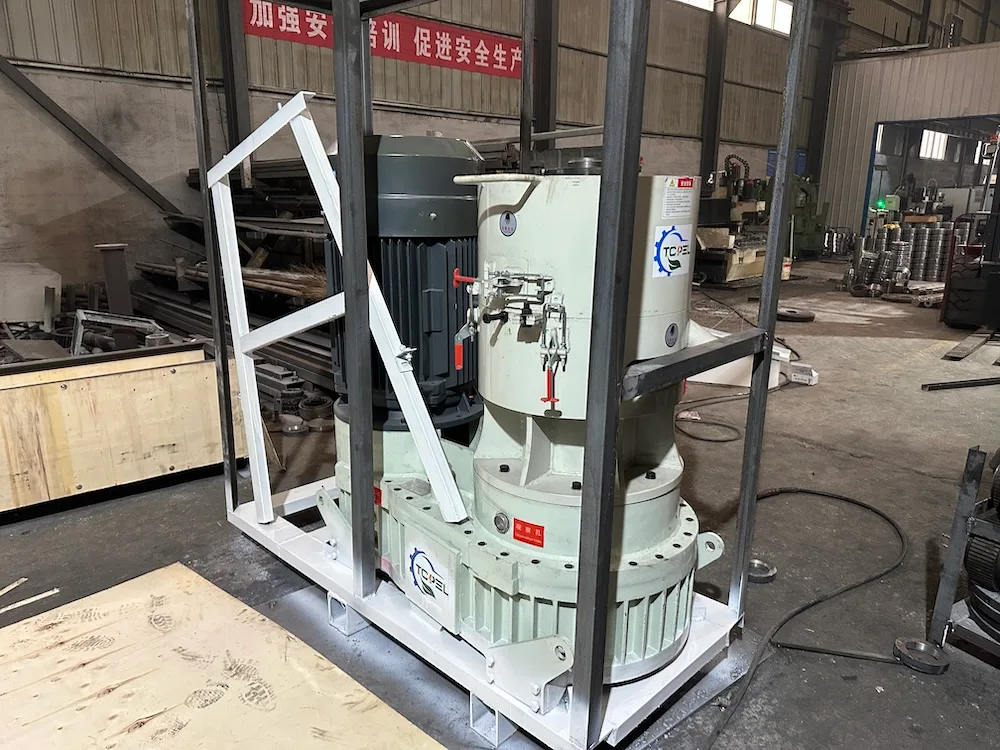
Vertical ring die pellet mills have a vertical pelletizing chamber with top feeding. Press rollers force raw material into holes around the ring die. TCPEL uses vertical ring die pellet mills for wood and biomass pellet projects. A vertical ring die pellet mill is not an enlarged flat die pellet mill. Horizontal ring die rotation patterns and maintenance procedures cannot automatically guide vertical equipment selection. Horizontal ring die capacity figures cannot establish vertical ring die pellet mill output either. Consult the technical documentation for the specific pellet mill model.
Comparison | Flat Die | Horizontal Ring Die | Vertical Ring Die |
|---|---|---|---|
Construction | Disc-shaped die. TCF uses inclined rollers with a stationary flat die. | Ring-shaped die. Common designs rotate the ring die. | Ring-shaped die with a vertical arrangement and top feeding. |
Project fit | Select TCF feed pellet mills by feed formula. Assess TCZL wood pellet mills by model. | Match the feed formula, conditioning process and production requirements. | Assess industrial wood and biomass pellet production requirements. |
Maintenance | Inspect dies, rollers, bearings and lubrication. Flat die pellet mills are not all lightweight equipment. | Inspect dies, rollers, transmission and any installed conditioning equipment. | Inspect dies, rollers, transmission and lubrication. Check access for dismantling. |
Supporting equipment | Inadequately prepared materials still require grinding, drying or mixing equipment. | Confirm the required feeding, conditioning and cooling equipment. | Match preparation, conveying, cooling and packing to the material and output. |
Project budget | Check whether feeding and electrical controls are included in the quotation. | Include conditioning equipment and required utilities in the budget. | Include pellet production line compatibility, electrical supply and maintenance access in the budget. |
For every pellet mill type, check component weights, maintenance space and dismantling procedures. Flat die construction does not make every maintenance task suitable for one person.
Choose by Raw Material and Compare Specific Models
Sawdust batches can differ considerably, even when sold under the same description. Wood species, bark content, wood shavings and moisture affect how sawdust forms pellets. Reduce long fibres to a suitable particle size before pelletizing. Wet sawdust requires drying, while stones and metal must be removed beforehand. Switching to a ring die pellet mill cannot compensate for missing material preparation.
For feed projects, specify the target animals, ingredients and feed formula. Grain-based compound feed and fibrous forage may require different pellet mills. Matching die hole diameters do not guarantee identical equipment suitability for both materials. This article addresses equipment processing capabilities only. The customer or a qualified feed formulator remains responsible for nutritional formulation.
Pellet strength cannot be explained by flat die or ring die construction alone. Material condition, die hole design, feeding and compression conditions all influence pellet quality. Cooling and subsequent handling also affect the finished pellets. Compare equipment using identical raw materials, die hole diameters and testing methods. Photographs of pellets produced under different conditions cannot establish which machine performs better.
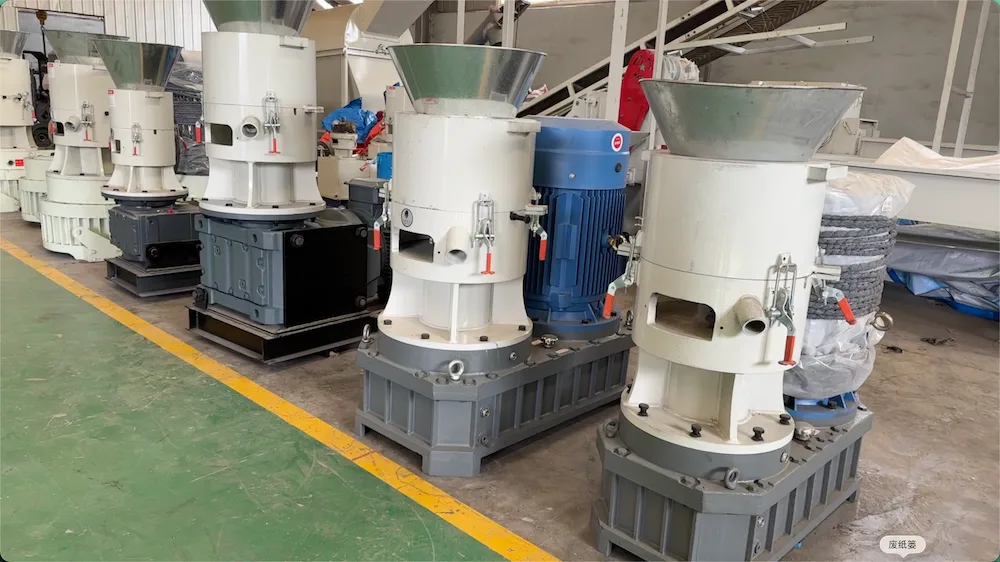
Some buyers assume flat die pellet mills cannot exceed 400 kg/h. TCPEL’s catalogue lists TCZL flat die wood pellet mills exceeding 400 kg/h. Compare specific pellet mill models instead of assuming one limit for all flat dies.
Flat Die Model | Rated Power | Reference Wood Pellet Output |
|---|---|---|
TCZL400 | 37 | 400–500 |
TCZL450 | 55 | 600–800 |
TCZL550B | 90 | 1000–1200 |
TCZL650 | 110 | 1200–1400 |
The table shows reference wood pellet capacities, not animal feed production rates. Actual output depends on the raw material, die and operating conditions. The listed wood pellet capacities cannot be guaranteed for every raw material.
Match Daily Production Targets to Effective Operating Hours
Scheduled working hours are not the same as effective production time. Effective production time means the hours spent producing finished pellets. Startup preparation, cleaning between materials and planned maintenance reduce available production hours. Base production targets on finished pellets meeting the required quality standard.
Required hourly output = daily target for acceptable pellets ÷ effective production hours.
After calculating hourly requirements, check the pellet mill and all supporting equipment capacities.
A short trial cannot prove that a pellet mill sustains continuous full-load production. When requesting quotations, confirm the operating conditions for the motor and transmission. Check bearing lubrication, feeding stability and scheduled maintenance shutdowns. Avoid blanket claims that flat die pellet mills only support short operating periods. Ring die construction does not permit unlimited continuous production either.
TCPEL distinguishes producing pellets from consistently achieving the planned production target. A successful pelletizing trial shows that the material forms pellets under the trial conditions. Meeting production targets requires continuous discharge. The proportion of pellets meeting quality requirements also affects achievable output. All stages of the pellet production line must work together. A successful short trial cannot replace an assessment of complete production conditions.
Compare Complete Equipment Configurations and Total Project Costs
A standalone pellet mill may suit facilities with suitable grinding, feeding and product handling. Wet sawdust, large wood pieces and untreated long fibres need additional preparation equipment. Assess the required crushing, grinding and drying stages before comparing quotations. A cheaper pellet mill does not necessarily mean a cheaper complete project.
TCPEL’s flat die catalogue lists a standard equipment package. The package includes a screw feeder, pellet mill, electrical cabinet and lubricating oil pump. Assembly tools are also included. The standard package excludes grinding, drying, cooling and packing equipment. A standard pellet mill package is therefore not a complete pellet production line. Compare equipment lists item by item, rather than comparing quotation totals alone.
Use consistent measures when comparing operating costs. Motor nameplate rated power helps determine electrical supply requirements. Rated power does not equal actual electricity consumption per tonne of finished pellets. Compare specific electricity consumption, measured per tonne of acceptable finished pellets. Also compare replacement wear parts, labour and maintenance records under equivalent production conditions. Use identical raw materials and finished-pellet quality requirements for the comparison. Without comparable measurements, claims about superior efficiency or longer die life remain unsupported.
Use Example Projects to Narrow Your Equipment Options
The following examples illustrate equipment selection and do not guarantee machine performance. Actual recommendations depend on raw material testing and project discussions.
Example One Dry Sawdust and Three Tonnes of Pellets Daily
An eight-hour shift provides six effective production hours after preparation, cleaning and maintenance. Producing three tonnes daily therefore requires 500 kg/h of acceptable finished pellets.
Start by evaluating TCZL flat die pellet mills. The TCZL400 flat die pellet machine has a catalogue maximum of 500 kg/h. That maximum alone cannot confirm suitability for this three-tonne daily production target. Assess alternatives such as the TCZL450 for sustained output with the customer’s actual sawdust. Confirm that pellet cooling and packing equipment can handle the required production rate.
Example Two Feed Production With Existing Grinding and Mixing Equipment
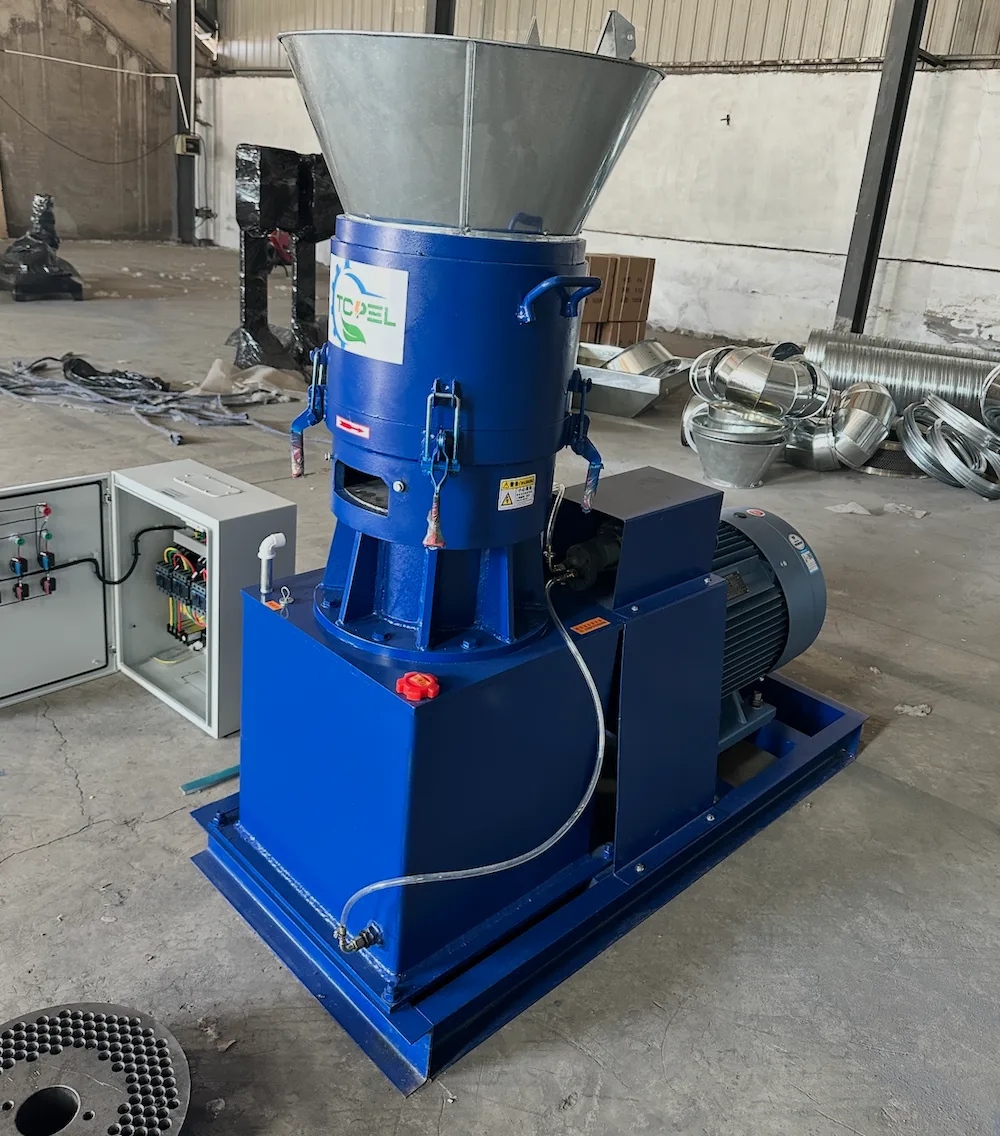
A poultry or livestock feed producer already has prepared ingredients and an established formula. The feed project only needs pelletizing and equipment for handling finished pellets. Start by evaluating TCF inclined roller flat die feed pellet mills. Do not select feed pellet mills using a wood pellet capacity table. Producing animal feed does not automatically require a complete horizontal ring die production line.
Example Three Two Tonnes of Wood Pellets Hourly and Extended Operation
The project targets two tonnes of finished wood pellets per hour. Planned operation is 16 hours daily, and the raw material still requires drying. Start by evaluating a complete TCPEL vertical ring die pellet production line. Check dried-material supply, continuous feeding, pellet cooling and packing alongside the pellet mill. Adding several flat die pellet mill catalogue capacities cannot establish actual pellet production output.
TCPEL Troubleshooting Guide for Pellet Mill Selection
Actual production may fall short of the output estimated during equipment selection. Use the following checks to investigate the difference.
Observed Situation | What to Check First |
|---|---|
Daily finished-pellet output is below the production plan. | First separate low hourly output from lost production time. Record effective operating hours and the acceptable finished-pellet output during a timed run. If hourly output is normal, investigate stoppages and feeding interruptions. If hourly output is low, check material preparation, feeding continuity, die and roller condition, and downstream restrictions. |
A flat die pellet mill repeatedly triggers overload alarms during extended high-output operation. | Check the selected model’s rated capacity. Determine whether the biomass is difficult to pelletize. Review the permitted conditions for continuous operation. Assess vertical ring die equipment if operating demands consistently exceed the selected model’s capabilities. |
A pellet mill model works elsewhere. Your project misses output or pellet quality targets. | Compare wood species, bark content and moisture between the projects. Check die hole compression ratio and die specifications. Review grinding and drying before pelletizing. Pellet quality depends on the complete process. Replacing the pellet mill alone may not solve the problem. |
Only the bare pellet mill was purchased. The project cannot meet production requirements. | Identify missing preparation, conveying and cooling equipment. Calculate total investment after adding the required equipment. Consider whether processing stages can be added progressively. Otherwise, reassess the equipment selection. |
Catalogue capacities describe reference output under specified material and operating conditions. Material variability, inadequate preparation and fewer effective production hours can reduce actual output. Select pellet mills for the customer’s actual conditions, rather than catalogue figures alone.
TCPEL Equipment Selection Case Study
The customer selected a TCPEL TCZL550B flat die wood pellet mill. The TCZL550B’s rated capacity was 1,000–1,200 kg/h. The customer expected ten tonnes daily, based on catalogue figures and ten scheduled hours. Actual daily output reached only six to seven tonnes of acceptable wood pellets. The customer initially attributed the production shortfall to poor equipment quality.
Inspection found only seven effective production hours within the scheduled working day. Clearing blockages and removing contaminants took up the remaining time. The sawdust contained a high proportion of bark, and moisture varied substantially. The preparation process lacked reliable grinding and screening, while feeding was frequently interrupted. Short pellet mill tests reached catalogue capacity. However, the customer’s production conditions prevented sustained operation at full capacity.
Technicians added raw material screening and controlled bark content and sawdust particle size. They improved the drying system to stabilise sawdust moisture. Improvements to the feeding system provided continuous, uniform material delivery. TCPEL also recalculated the project requirements and explained the output achievable with this material.
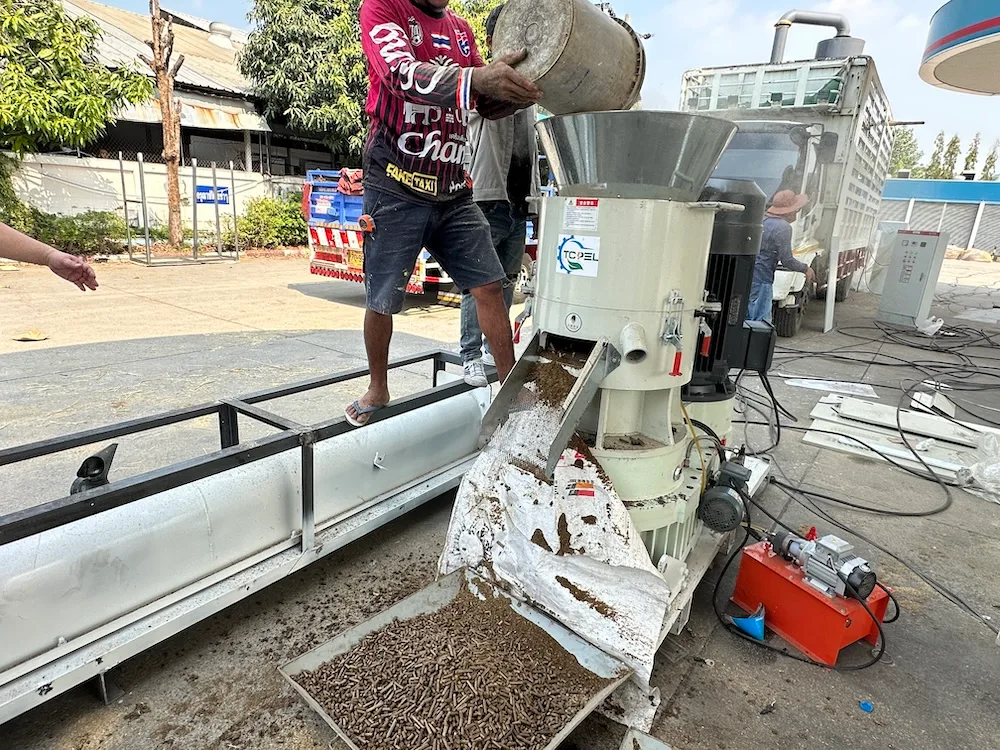
Producing ten tonnes in seven effective hours requires an average of approximately 1,429 kg/h of acceptable finished pellets. This exceeds the TCZL550B’s listed reference range of 1,000–1,200 kg/h. Better preparation and steadier feeding can reduce production losses, but they do not remove this capacity gap. Meeting the daily target would therefore require more effective production hours or a different equipment configuration, assessed with the actual raw material.
After preparation and feeding improvements, acceptable pellet output reached seven to eight tonnes daily. The improved output was maintained within seven effective production hours. Short pellet mill tests at full load also reached the catalogue’s capacity range. The revised production assessment brought customer expectations into line with achievable project output.
Information to Provide When Requesting a TCPEL Quotation
Please provide the following details when asking TCPEL to recommend pellet production equipment.
- The intended use of the finished pellets.
- The main raw materials, with representative photographs.
- Current raw material moisture content and particle size.
- Target finished-pellet output per hour or per day.
- Daily working hours and the longest planned period of continuous operation.
- Required pellet diameter and local supply voltage, frequency and phase configuration.
- Existing equipment, additional processing stages needed and the available project budget.
If test results are unavailable, send material photographs and the operating information already known.
We first identify a suitable equipment type, then compare models and supporting equipment. The right pellet mill must suit your material and production schedule. Choose the equipment configuration that can complete your production task. Simply ranking flat die and ring die pellet mills cannot determine project suitability.
Conclusion
TCPEL’s selection process helps avoid common purchasing mistakes and unmet production expectations. Contact the TCPEL technical service team if equipment selection remains uncertain. We can also help when installed equipment misses output or pellet quality targets. Please provide raw material details, operating conditions and equipment operating records. TCPEL engineers can review suitable equipment options and provide technical support.