
What is a feed hammer mill?
A feed hammer mill reduces feed raw materials or ingredients before downstream mixing, pelletizing or other feed processing. Rotating hammers apply impact inside the grinding chamber, and a screen lets smaller material pass while larger particles remain for further grinding. TCPEL’s current feed-grinding family includes the HM Series and the integrated grinder-and-chipper MGDP-B Series. Across the 12 current models, documented nominal grinding capacity spans 120–2500 kg/h; this is portfolio coverage, not guaranteed finished output. Select a model by material type and form, required capacity, target particle size, electric or diesel preference and feed-line integration.
Feed Grinding Before Mixing and Pelletizing
TCPEL feed hammer mill machines reduce prepared feed raw materials to ground material for subsequent mixing, pelletizing or other feed processing. The current family includes the HM Series and the integrated grinder-and-chipper MGDP-B Series, with 12 verified models. HM provides electric models plus two documented diesel options, while MGDP-B adds a broader material-handling route with verified feed applications and selected agricultural or woody materials as secondary capabilities. Compare models by raw material type and form, required grinding capacity, target particle size, drive requirement, power supply and feed-line integration. Published capacities are model-specific documented nominal grinding capacities; they are not guaranteed finished-output rates. Screen selection and final configuration should be confirmed for the actual project.
Choose Between HM and MGDP-B
Feed-Focused Hammer Mill Route
HM is the current feed hammer mill series, with six documented electric models and two diesel-engine options.
- Electric models from 3 kW to 37 kW
- HM420C: 15 HP diesel
- HM420D: 22 HP diesel
- Capacity overlaps between models are preserved
Integrated Grinder + Chipper Route
MGDP-B is a current integrated grinder-and-chipper hammer mill series with verified feed applications and broader material handling.
- Four electric models from 11 kW to 37 kW
- Verified corn, soybean and grass-powder feed applications
- Selected agricultural and woody materials are secondary capabilities
- Not a universal “large” capacity category
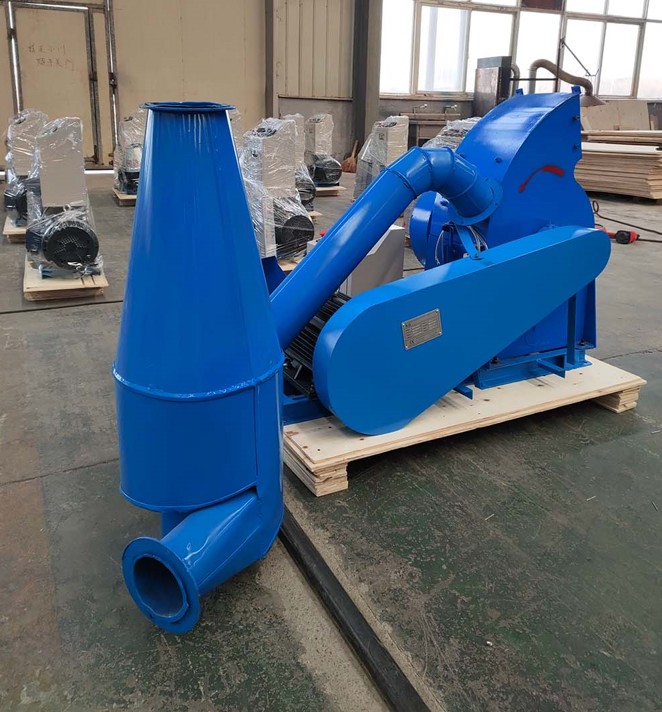
HM Series Specifications
HM provides electric and documented diesel routes for feed raw material grinding. The size field below is packing size, not machine size. Multiple packing entries are preserved without guessing component allocation.
| Model | Drive / Power | Documented nominal grinding capacity | Packing size | Weight |
|---|---|---|---|---|
| HM198B | 3 kW electric | 120–250 kg/h | 950×620×1140 mm | 135 kg |
| HM420A | 7.5 kW electric | 250–500 kg/h | 1240×1000×1200 mm | 270 kg |
| HM420B | 11 kW electric | 500–700 kg/h | 1240×1000×1200 mm | 320 kg |
| HM420C | 15 HP diesel | 250–500 kg/h | 1650×800×1120 mm | 390 kg |
| HM420D | 22 HP diesel | 500–700 kg/h | 1650×800×1120 mm | 420 kg |
| HM500A | 15 kW electric | 700–1000 kg/h | 1400×1100×1300 mm; 1300×500×700 mm | 460 kg |
| HM500B | 22 kW electric | 900–1300 kg/h | 1900×1100×1300 mm; 2100×900×1100 mm | 640 kg |
| HM600A | 37 kW electric | 1200–1600 kg/h | 2150×1300×1400 mm; 2100×900×1100 mm | 930 kg |
MGDP-B Series Specifications
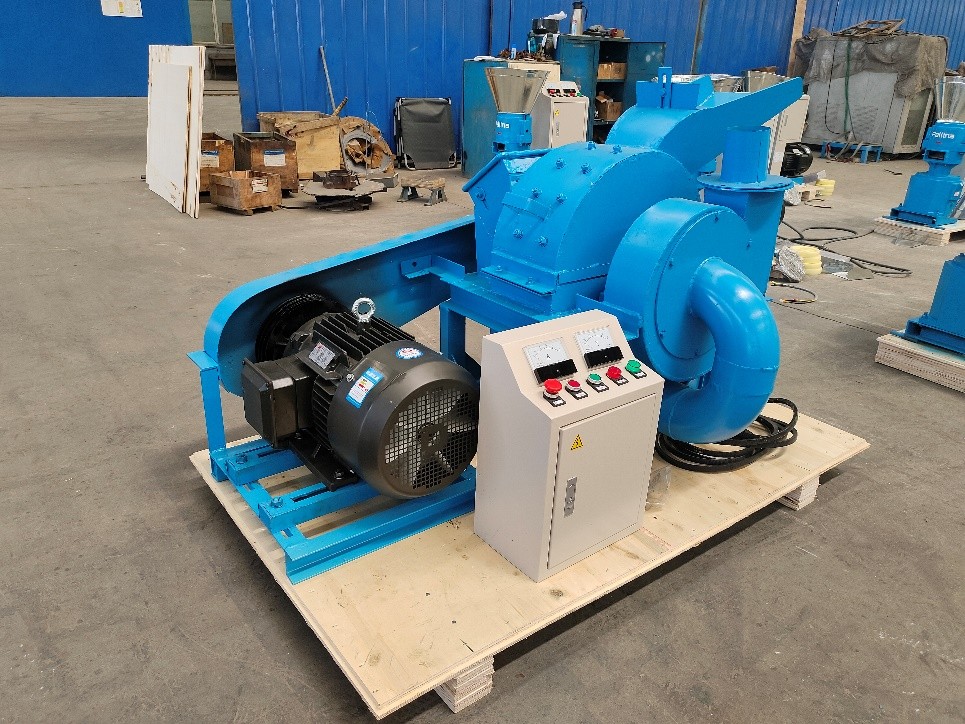
MGDP-B combines a broader material-handling route with verified animal-feed grinding applications. The size field below is machine size, which is intentionally kept separate from HM packing-size data.
| Model | Power | Documented nominal grinding capacity | Machine size | Weight |
|---|---|---|---|---|
| MGDP-420B | 11 kW | 500–800 kg/h | 1600×600×1200 mm | 360 kg |
| MGDP-500B | 22 kW | 800–1200 kg/h | 2200×1300×1450 mm | 600 kg |
| MGDP-600B | 30 kW | 1200–1800 kg/h | 2300×1450×1450 mm | 780 kg |
| MGDP-700B | 37 kW | 1800–2500 kg/h | 2450×1500×1450 mm | 900 kg |
Materials and Application Boundary
Feed-primary materials
Prepared feed ingredients requiring size reduction, including verified grains, legumes, corn, soybeans and grass powder within the documented series scope.
Agricultural materials
MGDP-B also documents crop residues, straw, corn stalks, peanut shells and weeds. Suitability remains material- and project-specific.
MGDP-B secondary capability
Branches, raw logs and selected woody materials are secondary MGDP-B capabilities. They do not change this page’s animal-feed grinding intent.
This page does not claim compatibility with all feed ingredients, all biomass or all materials.
Input, Output and Process Boundary
Upstream size reduction
A feed hammer mill prepares raw material. It does not produce finished feed pellets, mixed feed or packed feed by itself.
Downstream processing
Ground material may move to a feed mixer where mixing is required, then to a feed pellet machine for pelletizing.
How a Feed Hammer Mill Works
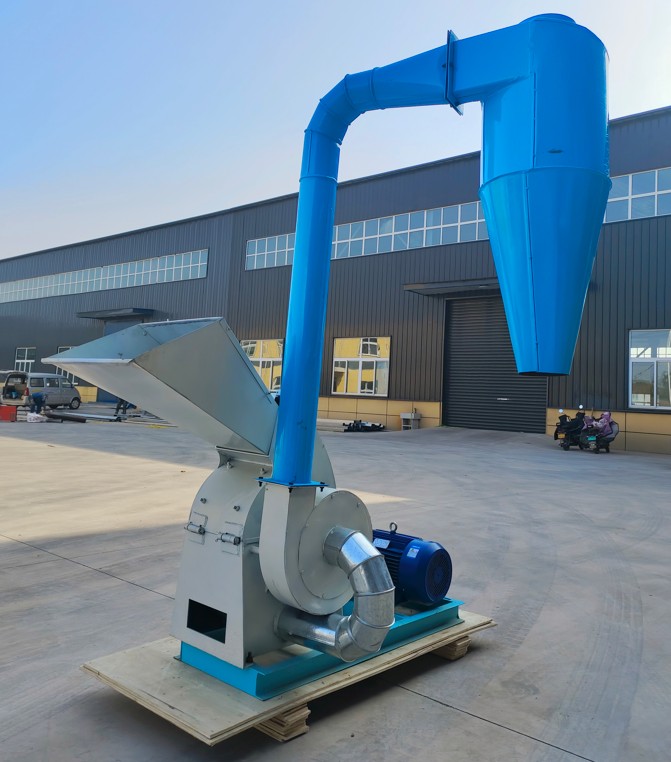
Feed material enters the grinding chamber, where rotating hammers apply impact. Material and chamber collisions continue the size-reduction process. Smaller material passes through the screen, while larger particles remain in the chamber for further grinding.
Changeable screens help control grinding fineness. Exact screen-hole size and final particle-size performance must be confirmed for the selected model and project; no universal output-size value is published.
How to Select a Feed Hammer Mill
- Identify the raw material type and verified application.
- Describe the raw material form before grinding.
- State the required grinding capacity.
- Provide the required final particle size for project confirmation.
- Choose an electric route or one of the documented HM diesel options.
- Confirm the applicable power supply.
- Explain standalone use or feed pellet production line integration.
- Provide maximum input size and moisture context when relevant, without assuming universal numeric limits.
Feed Hammer Mill vs General Hammer Mill
This feed-specific page
Focuses on TCPEL HM and MGDP-B feed-grinding equipment, animal-feed raw materials and preparation for downstream feed processing.
Broader GXP applications
For broader GXP wood and biomass applications, review the general hammer mill range. GXP screen-size and moisture claims are not reused here.
“Feed crusher” and “feed grinder” are related buyer terms only. HM and MGDP-B remain accurately described as feed hammer mill equipment.
Feed Hammer Mill FAQs
What is a feed hammer mill?
A feed hammer mill uses rotating hammers and a screen to reduce feed raw materials before downstream feed processing. TCPEL’s current family includes HM and MGDP-B models.
What is a hammer mill used for in feed production?
It performs size reduction before subsequent stages. Ground material may move to mixing where required and then to pelletizing; the hammer mill does not make finished feed pellets by itself.
What is the difference between a feed hammer mill and a biomass hammer mill?
A feed hammer mill is selected around feed raw materials and downstream animal-feed processing. TCPEL’s general GXP range owns broader wood and biomass-primary applications.
What is the difference between a feed crusher and a feed hammer mill?
“Feed crusher” is a broad buyer term. A feed hammer mill specifically uses hammers and a screen, so TCPEL uses feed crusher only where that mechanism and application match.
Which hammer mill is suitable for feed pellet production?
Compare HM and MGDP-B by material, required grinding capacity, target particle size, drive, power supply and line integration. The correct choice is project-specific.
Can a hammer mill grind corn and soybean for animal feed?
Corn and soybean are documented MGDP-B feed applications. Final suitability still depends on material form, target particle size and required capacity.
What capacity feed hammer mill do I need?
Compare your target with each model’s documented nominal grinding capacity. The current 120–2500 kg/h portfolio span is not a guaranteed finished-output range.
How does changing the screen affect grinding?
A changeable screen helps control grinding fineness. Exact screen-hole size and final particle-size performance must be confirmed for the selected model and project.
Are diesel feed hammer mills available?
Yes. HM420C is documented with 15 HP diesel and HM420D with 22 HP diesel. The other listed HM and MGDP-B models are electric routes.
What is the difference between HM and MGDP-B?
HM is the feed-focused series with electric and two diesel options. MGDP-B is an integrated grinder-and-chipper series with verified feed applications and broader secondary material capability.
Can a feed hammer mill be integrated into a feed pellet production line?
Yes. Grinding is a required process stage in the current line architecture, but the specific HM or MGDP-B machine is configured for the project.
What information is needed to select a feed hammer mill?
Provide material type and form, required capacity, target particle size, electric or diesel preference, power supply and feed-line integration. Maximum input size and moisture are checked when relevant.
Related Feed Processing Equipment
Request a Feed Hammer Mill Recommendation
Tell TCPEL your material, required capacity, target particle size, electric or diesel preference, voltage and feed-line integration needs. The first inquiry form stays simple; our sales team will confirm technical details by WhatsApp or email.
Send Your Feed Hammer Mill Inquiry