
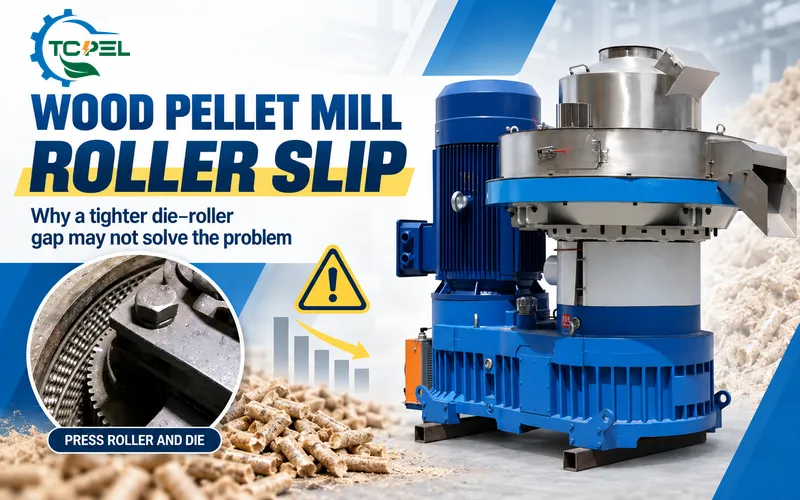
At TCPEL, we often encounter roller slip during wood pellet production. The problem affects flat die pellet machines and vertical ring die pellet machines. Sawdust reaches the pelleting chamber normally, but pellet output continues falling. Meanwhile, large amounts of sawdust build up around the press rollers.
Operators often increase feeding or move press rollers closer to the die. Either adjustment may briefly improve output without correcting the underlying fault. Repeated adjustments can even cause permanent damage to dies and roller shells. This article covers slip between press rollers and sawdust, excluding drive belt slip.
Press rollers rely on friction against sawdust to draw material toward the die. Friction provides traction, allowing the roller surface to grip and move sawdust. Material draw-in brings sawdust into the compression zone between press rollers and die. When press rollers lose that grip, sawdust cannot enter the die holes steadily. Unsteady sawdust entry into the die holes disrupts pellet production. A normally rotating main motor does not prove every press roller rotates properly.
Stop feeding immediately if roller slip persists, substantial buildup develops or unusual noises occur. Follow the pellet mill fault shutdown procedure. Before opening guards, isolate and lock out the relevant energy sources. Confirm that all movement has stopped and stored energy has been released. Allow hot components to cool before inspection. Never open guards to observe moving pellet mill components. Never repeatedly start and stop a pellet mill containing abnormal material buildup. Do not wait for the pellet mill to empty itself during these faults.
Excessive Feeding Makes Material Buildup Worse
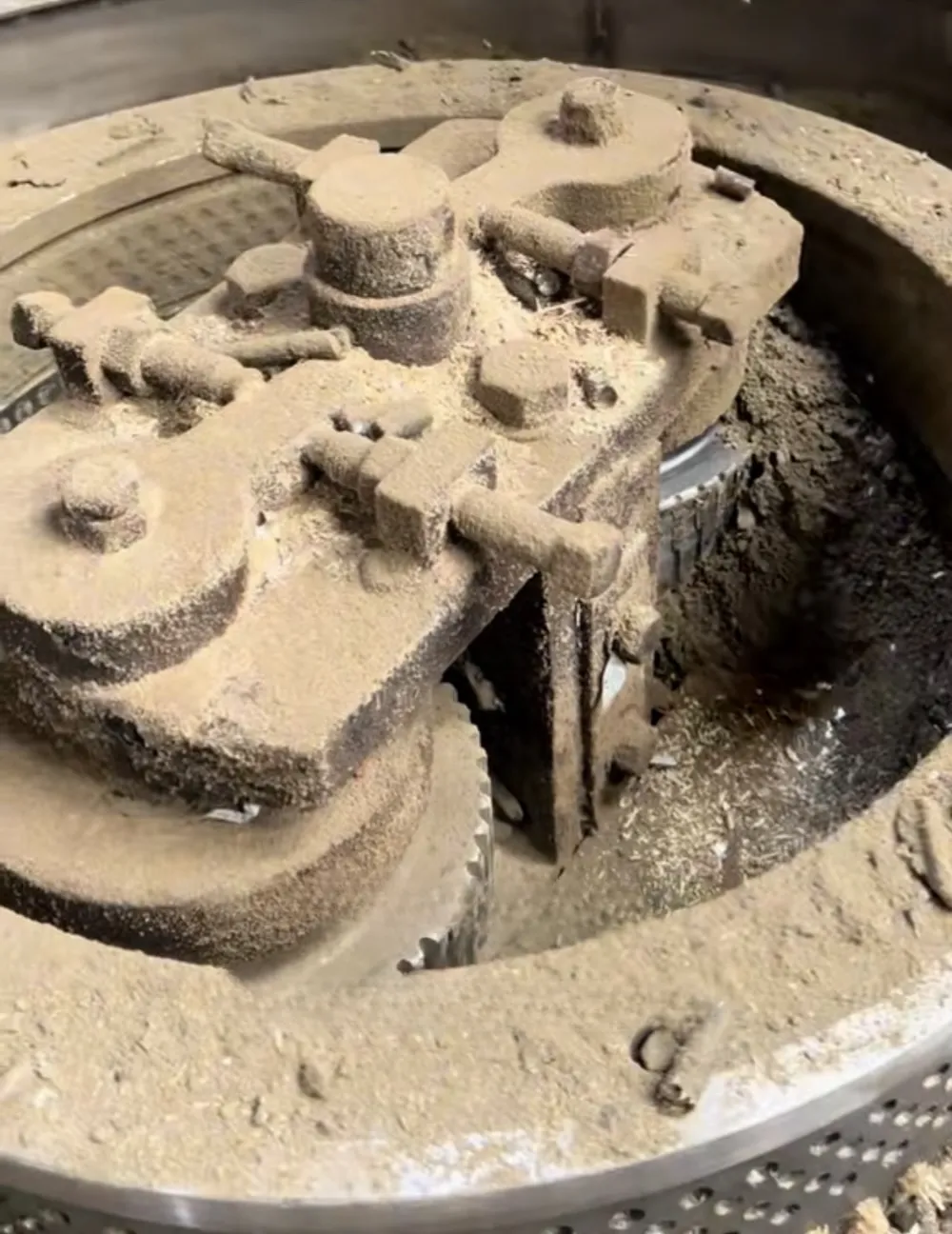
Sawdust must enter the pellet mill continuously and evenly. The feed rate is the amount of sawdust supplied per unit time. Excessive feeding can create an overly thick feedstock layer ahead of the rollers. Press rollers then struggle to draw sawdust into the compression zone. Material buildup increases while pellet output falls. Roller slip is more likely before production stabilizes with a newly conditioned die. Even after die break-in, do not immediately begin feeding at full capacity.
After shutdown and energy isolation, confirm safe conditions before clearing abnormal chamber buildup. Check whether the die holes are clear while removing accumulated sawdust. Correct the fault and restore all guards before restarting the pellet mill. Begin with a lower sawdust feed rate, then increase feeding gradually. Monitor pellet discharge and main motor load while adjusting the feed rate. Making the feedstock layer as thin as possible is not the goal. Match sawdust feeding to the pellet mill’s actual pressing capacity.
Excessively wet sawdust can also reduce roller traction and cause slipping. Roller slip may begin after a sawdust batch change or altered drying conditions. Take moisture samples from several locations in the sawdust entering the pellet mill. Measure sawdust moisture rather than judging moisture by touch alone. Never add water or spray oil directly into the pelleting chamber. Correct unsuitable sawdust moisture during upstream material preparation.
Adjust the Die–Roller Gap Without Forcing Metal Surfaces Together
The die–roller gap separates the working surfaces of the die and press roller. An excessive gap prevents stable compression and can cause material buildup and slipping. However, progressively closing the gap can force metal surfaces into direct rubbing contact. Forcing the press roller against the die rapidly accelerates wear. Severe contact can destroy the die and roller shell.
Keep the pellet mill isolated after shutdown and cleaning before checking the gap. Follow the TCPEL manual and measure the gap at the specified positions. Check that the adjustment mechanism and locking components are secure. One acceptable measurement does not confirm correct clearance throughout the pellet mill.
Roller shells may have uneven wear, an irregular shape or misaligned mounting. Out-of-roundness means the roller shell is no longer properly circular. A suitable gap at one position may coexist with tight contact elsewhere. Correct wear and assembly problems before repeatedly readjusting the gap.
Check Roller Shell Wear and Die Hole Condition
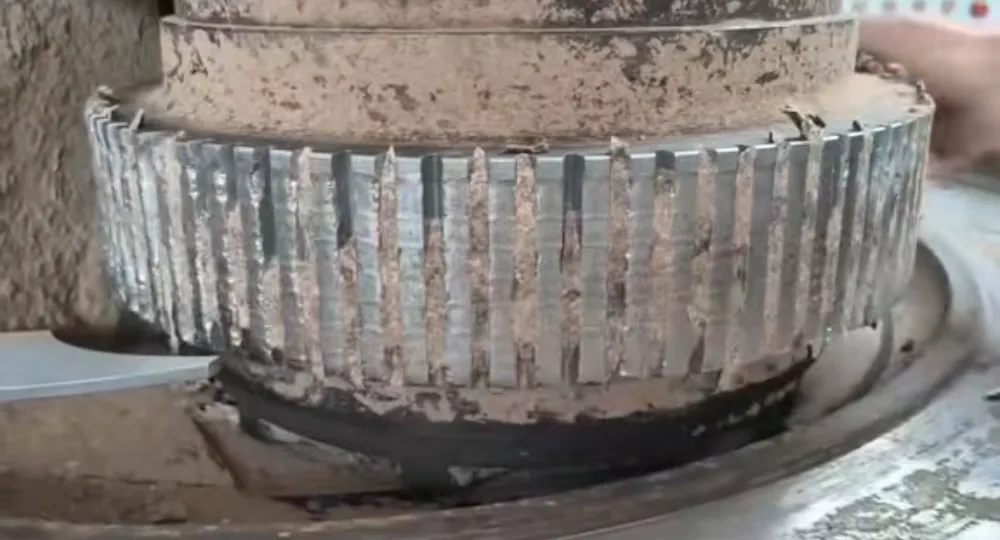
The roller shell is the outer working part that contacts the sawdust. Grooves or dimples on the roller shell help grip and draw in material. When the working surface wears smooth, the roller shell loses traction. Remove attached material before inspecting roller shell condition. Inspect wear across the entire active working surface. A few remaining grooves near the roller edge do not confirm usable condition. When replacement is required, use roller shells specified for the TCPEL pellet mill.
Blocked die holes or damaged die-hole inlets also increase resistance to compression. The die-hole inlet is where sawdust enters a hole from the working surface. Press rollers may keep turning while repeatedly pushing accumulated material. Sawdust still cannot pass smoothly into the obstructed die holes. Check die holes for blockages and inspect the inlets for damage. Clean or repair the die using only permitted methods. Reducing the die–roller gap cannot clear blocked die holes. Never grind roller teeth or enlarge die holes without authorization.
Check Bearings and Assembly When Press Rollers Resist Rotation
Poor grip between sawdust and roller surfaces is not the only slipping cause. Damaged bearings, excessively tight assembly or interfering parts can restrict roller shell rotation. Binding means rotation is obstructed; binding does not automatically confirm a seized bearing. Shut down, isolate energy and clear accumulated material before checking press roller rotation. Maintenance technicians should check press roller rotation using the specified procedure. Inspect press roller bearings, seals and assembly condition for abnormalities.
Repair mechanical faults first when restricted roller rotation accompanies localized overheating or unusual noise. Never force a faulty press roller to continue production by increasing sawdust feeding. Further gap tightening or adding grease without diagnosis cannot replace mechanical repairs.
How TCPEL Uses Fault Timing to Guide Roller Slip Checks
At TCPEL, we first establish when roller slip began before deciding what to inspect.
- If roller slip followed increased feeding, first check pelleting chamber buildup. Also check sawdust properties and whether the die holes are clear.
- If roller slip followed die, press roller or bearing replacement, recheck assembly first. Check press roller rotational resistance and the die–roller gap. Do not begin by changing the raw material formulation.
Clearing accumulated sawdust and reducing feeding may restore pellet output temporarily. Restored output only shows that the pellet mill can operate under lighter loading. Restored output does not prove that roller shells and dies are undamaged. During continuous production, keep monitoring pellet discharge and main motor load. Watch for renewed roller slip or material buildup. Repeated slipping after cleaning and restarting indicates that the underlying problem remains.
Successful troubleshooting restores reliable sawdust draw-in and compression through the die holes. Press rollers must also rotate freely and smoothly. Making the die–roller gap progressively tighter is not the objective.
These checks help identify likely causes of roller slip and material buildup. If roller slip continues after these checks, contact TCPEL’s technical service team. Describe component adjustments made before the fault and changes to the feed rate. Include the results of the inspections already completed. Our engineers can then provide technical support and solutions.
 English
  Español de México
  Bahasa Indonesia
  العربية
  Français
  Русский
  Português do Brasil
  Italiano