
What conveying equipment is used in a feed production line?
Feed production lines use different conveying equipment to move material between process stages without changing its form. TCPEL’s current family includes screw feeders or auger conveyors for controlled transfer, cleated belt conveyors for inclined formed-pellet handling, custom standard belt conveyors for project layouts, and custom bucket elevators for vertical lifting. Select the equipment by material type and form, required conveying capacity, horizontal, inclined or vertical direction, conveying distance, lift height where relevant, and the inlet and outlet interfaces with upstream and downstream machines.
Four Feed Conveying Routes in One Product Family
TCPEL supplies four types of feed conveying equipment for material transfer between feed and pellet production stages. Screw feeders, also described as screw or auger conveyors, support controlled feeding and transfer. The MGQB380 cleated belt conveyor is used for inclined conveying of formed pellets. Custom standard belt conveyors are configured for horizontal or inclined project layouts, while custom bucket elevators provide vertical lifting between process stages. Equipment selection depends on the material type and form, required conveying capacity, conveying direction, distance, lift height where relevant, and the inlet and outlet interfaces with upstream and downstream machines. Each unit can be supplied as standalone equipment or configured within a feed pellet production line.
Screw / Auger Feeder
MGSL140 and MGSL260 for controlled feeding and transfer.
Cleated Belt Conveyor
MGQB380 for inclined conveying of formed pellets.
Standard Belt Conveyor
Custom horizontal or inclined transfer by project layout.
Bucket Elevator
Custom vertical lifting between production stages.
MGSL Controlled Feeding and Transfer
These three buyer terms refer to the same current TCPEL product type. The two fixed models use carbon-steel construction, a motor with reducer and a documented 1400 rpm motor speed. Model capacity is DOCUMENTED_NOMINAL_CONVEYING_CAPACITY, not guaranteed output or full-line capacity.
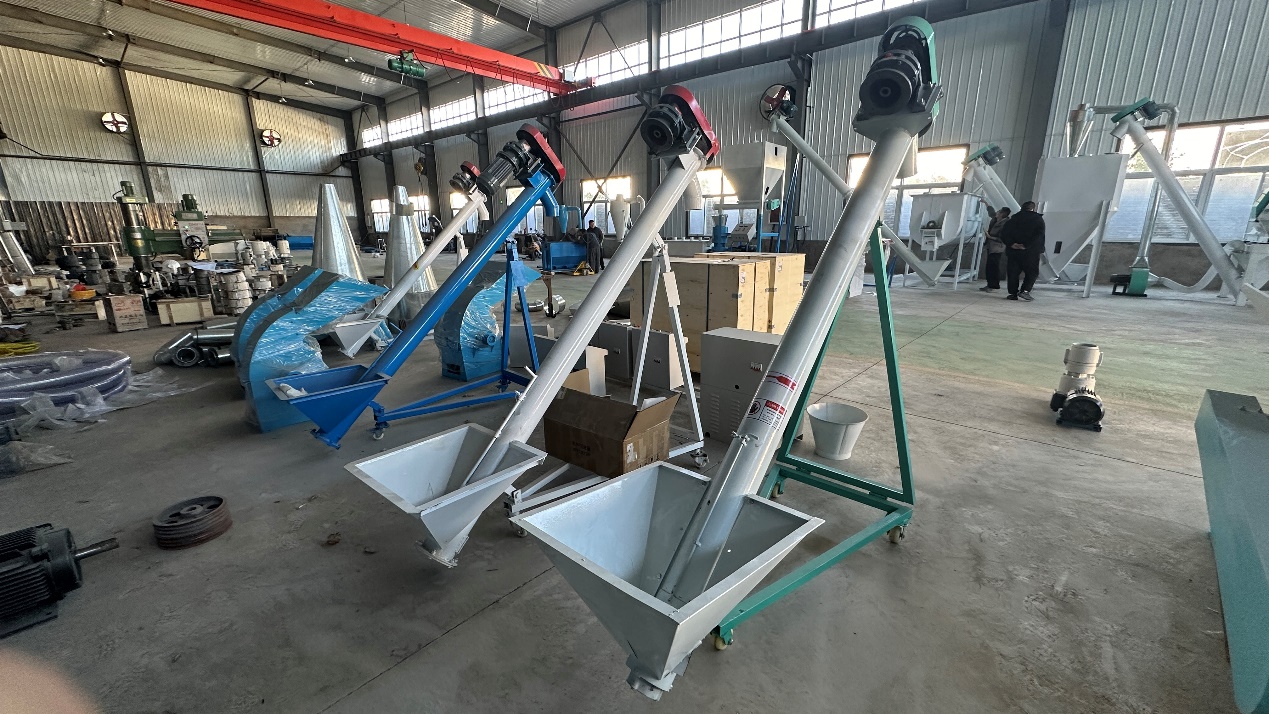
| Model | Power | Documented nominal conveying capacity | Packing size | Weight | Machine length | Feeder diameter | Power supply |
|---|---|---|---|---|---|---|---|
| MGSL140 | 1.5 kW | 0–1000 kg/h | 2800×700×850 mm | 220 kg | 2.5 m | Ø140 mm | 380V / 50Hz / 3 phase |
| MGSL260 | 2.2 kW | 1000–3000 kg/h | 2800×700×850 mm | 350 kg | 2.5 m | Ø260 mm | 380V / 50Hz / 3 phase |
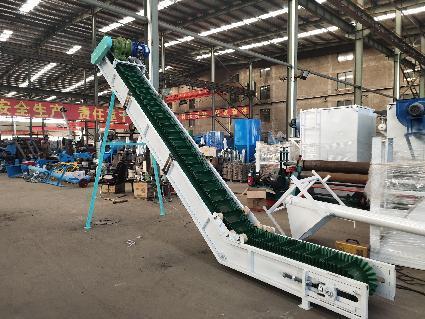
MGQB380 Inclined Formed-Pellet Conveying
MGQB380 is the current fixed cleated-belt model for inclined conveying of formed pellets. Length, lift height and belt width can be customized for the project.
| Model | Power | Documented nominal conveying capacity | Packing size | Lift height | Horizontal / inclined length | Belt width | Weight |
|---|---|---|---|---|---|---|---|
| MGQB380 | 2.2 kW | 0–2000 kg/h | 5680×1060×840 mm | 3.5 m | 1 m / 4.5 m | 400 mm | 280 kg |
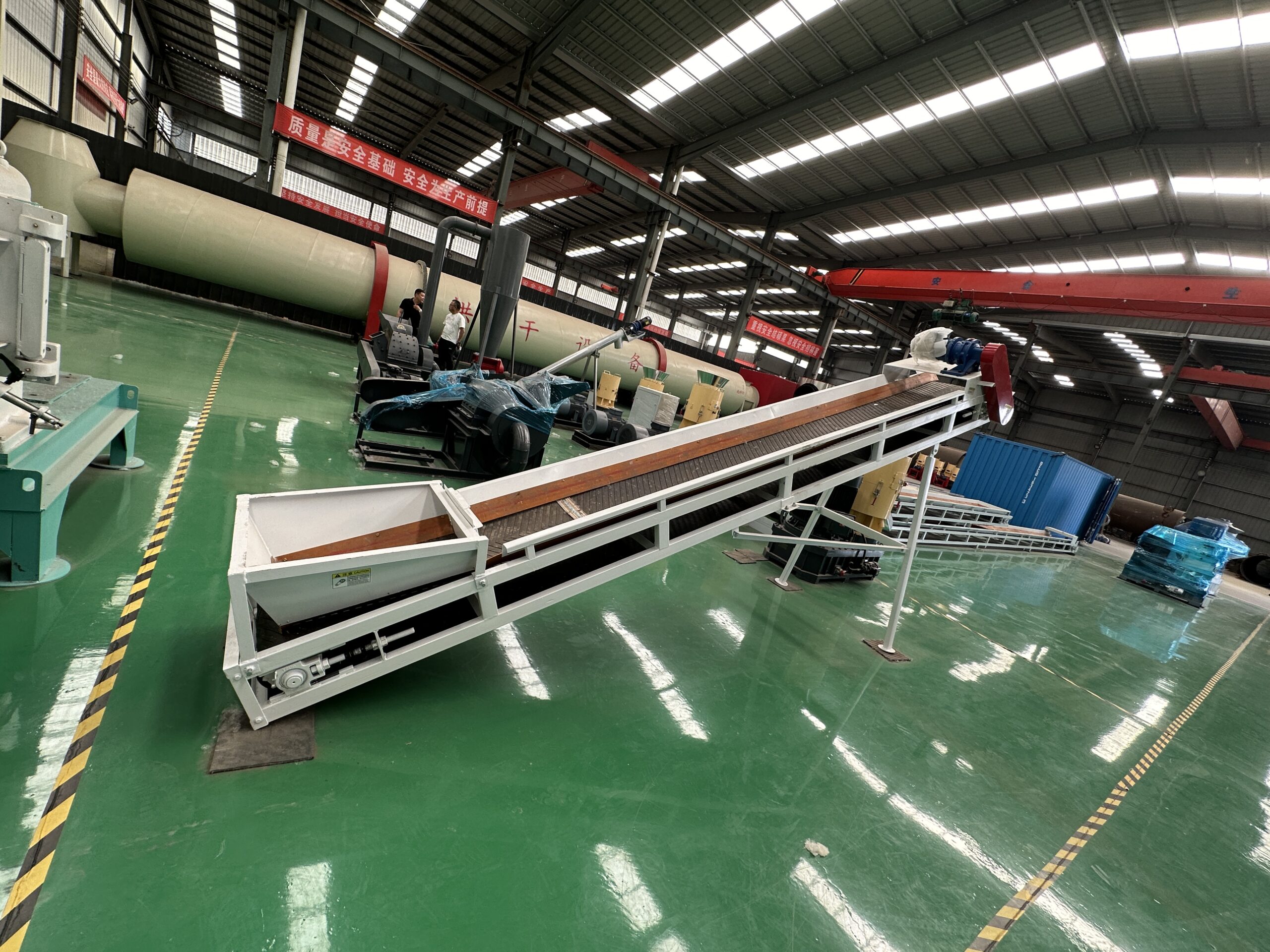
Custom Standard Belt Conveyor
Configured for horizontal or inclined transfer according to the material, conveying distance, route and equipment interfaces. No fixed model, power, belt width, angle, capacity or universal distance is published.
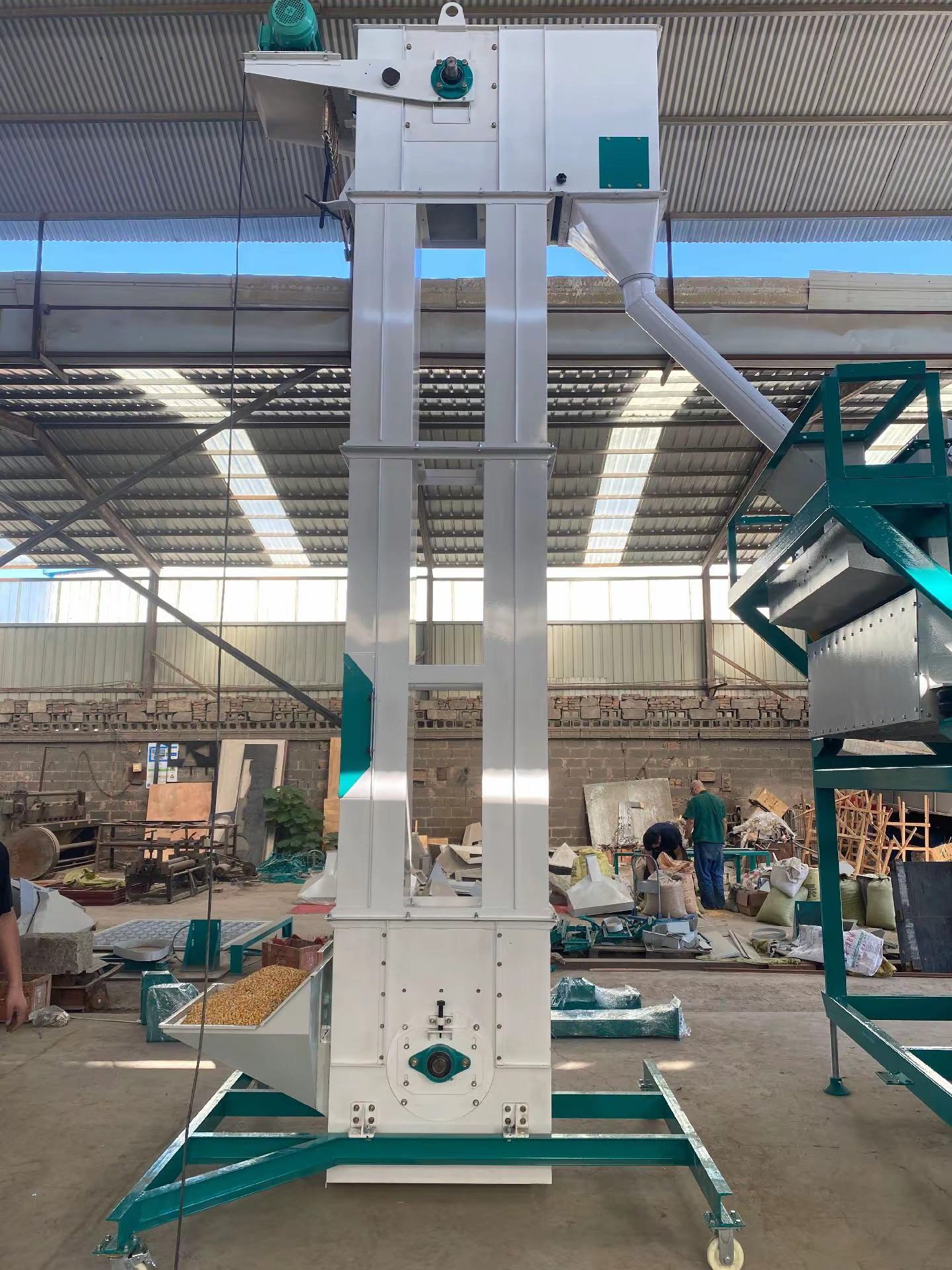
Custom Bucket Elevator
Configured for vertical lifting between process stages. No unapproved industry model, bucket size, spacing, belt or chain type, fixed capacity, motor power or universal lift height is inferred.
Input, Output and Process Boundary
Material form change: NO. Conveying equipment does not grind, mix, pelletize, cool or pack the material.
How to Select Feed Conveying Equipment
- Identify the material type.
- Describe the material form.
- State the required conveying capacity.
- Choose horizontal, inclined or vertical direction.
- Provide the conveying distance.
- Provide lift height for inclined or vertical transfer.
- Describe the inlet and outlet interfaces.
- Identify the upstream equipment.
- Identify the downstream equipment.
- Confirm the power supply before order.
- Describe required length, width or interface customization.
- State whether the unit is standalone or part of a feed pellet line.
The first inquiry form remains simple. TCPEL confirms these project details by WhatsApp or email after contact.
Standalone Equipment or Feed Pellet Line Integration
Standalone material handling
A screw feeder, belt conveyor or bucket elevator can be supplied for a defined transfer task between existing machines.
Complete feed project
For complete process architecture, full-line project coverage and turnkey boundaries, review the feed pellet production line. Specific conveying equipment is project configured.
Feed Conveying Equipment FAQs
What conveying equipment is used in a feed production line?
Screw or auger feeders support controlled transfer, cleated belts handle inclined formed pellets, standard belts serve project layouts, and bucket elevators provide vertical lifting.
Are screw feeders, screw conveyors and auger conveyors the same?
For the current TCPEL MGSL product type, these are related buyer terms for the same screw-based feeding and conveying route.
What is the difference between a screw conveyor and a belt conveyor?
A screw conveyor uses a rotating screw for controlled transfer. A belt conveyor carries material on a belt and may suit different horizontal or inclined layouts.
When should I use a cleated belt conveyor for pellets?
MGQB380 is verified for inclined conveying of formed pellets. Final selection depends on capacity, route, lift and equipment interfaces.
What is the difference between a standard belt conveyor and a cleated belt conveyor?
A standard belt is project configured for horizontal or inclined transfer. Cleats or sidewalls help retain formed pellets on the documented inclined MGQB route.
When is a bucket elevator used in feed production?
A bucket elevator is selected when material must be lifted vertically between process stages. Its final design is project configured.
Can feed conveyors be customized?
Yes. Custom belt and bucket equipment is configured for the route and interfaces, while MGQB length, lift height and width are documented customization items.
How is conveying capacity specified?
MGSL140, MGSL260 and MGQB380 use model-specific documented nominal conveying capacity. TCPEL does not publish a universal family capacity range.
Can conveying equipment be supplied as standalone machinery?
Yes. It can be supplied standalone or configured within a feed pellet production line.
What information is needed to configure feed conveying equipment?
Provide material type and form, required capacity, direction, distance, lift height where relevant, interfaces, upstream and downstream equipment, power supply and customization needs.
Related Feed and Pellet Equipment
Request a Feed Conveying Equipment Recommendation
Send your WhatsApp number, email and project message. TCPEL will follow up to confirm material, capacity, direction, distance, lift and interface requirements.
Send Your Conveying Equipment Inquiry