
A pellet maker usually fails because of unsuitable raw material moisture, oversized particles, blocked die holes, worn die or roller parts, unstable feeding, loose electrical connections, or insufficient lubrication. Start troubleshooting by checking power, material preparation, die condition, roller gap, feeding rate and motor temperature before replacing major parts.
This guide is written for operators using small pellet makers, flat die pellet machines and biomass or feed pellet equipment. If you are selecting a new machine instead of repairing an existing one, compare TCPEL pellet machines, flat die pellet machines, feed pellet machines and complete pellet production line options.
Quick Troubleshooting Table
| Problem | Common cause | Practical check | Typical fix |
|---|---|---|---|
| Machine will not start | Power, wiring, overload protection or control fault | Check supply voltage, breaker, emergency stop and terminal wiring | Reset protection, tighten wiring and test motor direction |
| No discharge | Blocked die, oversized material or wrong roller gap | Open the cover and inspect die holes, feeding chamber and roller position | Clean die holes, reduce particle size and adjust roller gap |
| Low output | Unstable feeding, low motor load, wet material or worn die | Check amperage, feeding rate, moisture and die wear | Stabilize feeding, adjust moisture and replace worn wear parts if needed |
| Soft or crumbly pellets | Wrong moisture, poor formula binding or low compression | Check raw material moisture, powder size and die compression ratio | Adjust moisture and formula, then confirm suitable die specification |
| Cracked pellets | Too dry material, fast cooling or excessive compression | Check moisture and observe pellet surface after discharge | Increase moisture slightly or adjust cooling and die selection |
| Overheating | Poor lubrication, bearing wear, high friction or overfeeding | Check bearing temperature, lubrication, belt tension and motor load | Add proper lubrication, reduce feeding and inspect bearings |
| Abnormal noise | Loose bolts, foreign metal, bearing damage or die roller contact | Stop the machine and inspect fasteners, chamber and bearings | Remove foreign material, tighten parts and replace damaged bearings |
| Uneven pellet size | Damaged cutter, worn die or unstable material flow | Check cutter position, die surface and feeding consistency | Adjust cutter, clean die and keep feeding steady |
| High fines | Weak pellet formation, rough handling or poor screening | Check pellet hardness and fines after cooling | Improve conditioning, adjust die and add screening if needed |
| Frequent die blockage | High moisture, sticky formula, oversized fiber or shutdown residue | Check material before feeding and clean die after shutdown | Control moisture, grind finer and run oil material before stopping |
1. Pellet Maker Will Not Start
Check the basic electrical conditions first. Confirm the main power supply, control cabinet, emergency stop, breaker, overload relay, wiring terminals and motor direction. If the machine was moved or newly installed, vibration during transport may loosen connections.
Do not force repeated starts when the motor trips. Record the fault condition, check whether the die chamber is jammed, and restart only after the cause is clear.
2. No Discharge From the Die
No discharge usually means the die holes are blocked, the roller gap is incorrect, the raw material is too large, or the feeding is unstable. For biomass material, oversized fiber and high moisture are common causes. For feed material, formula stickiness and poor mixing may also create blockage.
Clean the die holes, check the roller and die contact, reduce particle size, and feed material gradually after the machine reaches normal speed.
3. Low Pellet Maker Output
Low output can come from unstable feeding, wrong moisture, worn die holes, worn rollers, incorrect die compression ratio or insufficient motor load. Do not judge capacity from one short test only. Output depends on raw material, moisture, particle size, die diameter, roller condition and operator feeding method.
If the motor load is low, feeding may be insufficient. If the load is high but output is low, check friction, blockage and die wear.
4. Soft or Crumbly Pellets
Soft pellets are usually related to moisture, formula binding, powder size or compression. Material that is too dry may not bind well. Material that is too wet can slip inside the die and form weak pellets.
For many biomass projects, moisture often needs to be controlled within a suitable range before pelletizing. For feed pellets, formula, starch content and mixing uniformity also affect pellet hardness.
5. Pellet Maker Overheats
Overheating may come from bearing wear, poor lubrication, overfeeding, belt problems, blocked air flow, or excessive friction between die and roller. Stop the machine if temperature rises abnormally. Continuing operation can damage bearings, belts or the motor.
Check lubrication points, bearing temperature, belt tension, roller gap and material flow. If overheating returns after basic adjustment, inspect the bearing and transmission system.
6. Jammed Pellet Maker or Blocked Die
A jammed machine is often caused by material that is too wet, too coarse, too sticky or fed too quickly. It may also happen when the machine stops with raw material remaining in the die holes.
Before restart, clean the chamber and die carefully. For shutdown, many operators run oily material through the die to reduce residue and make the next start easier.
7. Abnormal Noise and Vibration
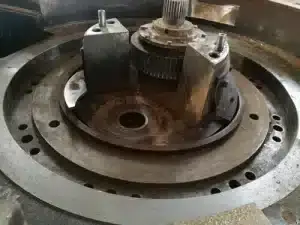
Noise and vibration can indicate loose bolts, bearing damage, foreign metal, misalignment, worn roller parts or direct contact between die and roller. Stop the machine before inspection. Never place hands into the feeding or pelletizing area while the machine is running.
Check bolts, belts, bearings, chamber cleanliness and whether any hard foreign object entered with raw material.
8. Uneven Pellet Size
Uneven pellet length is often caused by cutter setting, unstable discharge or inconsistent feeding. Uneven diameter usually points to die wear, damaged die holes or mixed raw material particle size.
Adjust the cutter, check the die surface and keep material preparation stable. If the die is badly worn, replacement may be more effective than repeated adjustment.
9. Too Many Fines After Pelletizing
Fines may increase when pellets are weak, cooling is too aggressive, conveying is rough, or screening is missing. First check pellet hardness at the machine outlet, then check the handling process after pelletizing.
If the pellet is already weak at discharge, adjust material moisture, formula, powder size and die compression. If the pellet is strong at discharge but breaks later, review cooling, conveying and packing.
10. Frequent Overload Protection
Overload protection should not be disabled. It protects the motor and transmission system. Frequent overload usually means feeding is too fast, material is too wet, the die is blocked, the roller gap is wrong, or the bearing/transmission resistance is too high.
Reduce feeding rate, clean the die, check lubrication and confirm the motor load. If overload continues, inspect the electrical system and mechanical resistance together.
When to Repair and When to Replace Parts
Clean and adjust the machine first when the problem is caused by raw material, moisture, feeding or operation. Replace parts when die holes are badly worn, rollers cannot grip material properly, bearings are noisy, or the machine cannot hold stable output after normal adjustment.
If the problem repeats, send TCPEL the machine model, material, moisture, pellet diameter, photos of the die and roller, a short running video and the fault condition. This helps identify whether the issue is operation, wear parts, raw material or machine configuration.
Related Pellet Machine Guides
- Pellet machine overview
- Flat die pellet machine for small feed and biomass pellets
- Feed pellet machine for animal feed production
- Biomass pellet machine for fuel pellet projects
- Ring die pellet machine or flat die pellet machine comparison
Pellet Maker Troubleshooting FAQ
Why does my pellet maker produce soft pellets?
Soft pellets are usually caused by unsuitable moisture, poor formula binding, oversized powder, low compression or worn die and roller parts.
Why is my pellet maker output lower than expected?
Output depends on raw material, moisture, powder size, pellet diameter, die condition, feeding stability and operating hours. Check these items before judging capacity.
What should I check first when the pellet maker will not start?
Check power supply, breaker, emergency stop, overload relay, wiring terminals and whether material is blocking the die chamber.
Can wet raw material block the die?
Yes. High moisture or sticky material can block die holes and increase motor load. Drying or better material preparation may be required.
When should I replace the die or roller?
Replace them when wear is obvious, pellet quality remains unstable after adjustment, or output stays low under correct raw material conditions.
Need help checking a pellet maker problem? Send raw material, moisture, pellet diameter, machine model, photos and a short running video. TCPEL can review the condition and suggest whether adjustment, spare parts or a different machine configuration is needed.